
Disgraced Bible teacher Steven Lawson, 75, has released the book Mercy in the Wilderness: How I Fell & What I Found, detailing events in his life that led to him having an adulterous affair with a woman in her twenties, his experience in the subsequent wilderness, and how he found his way out.
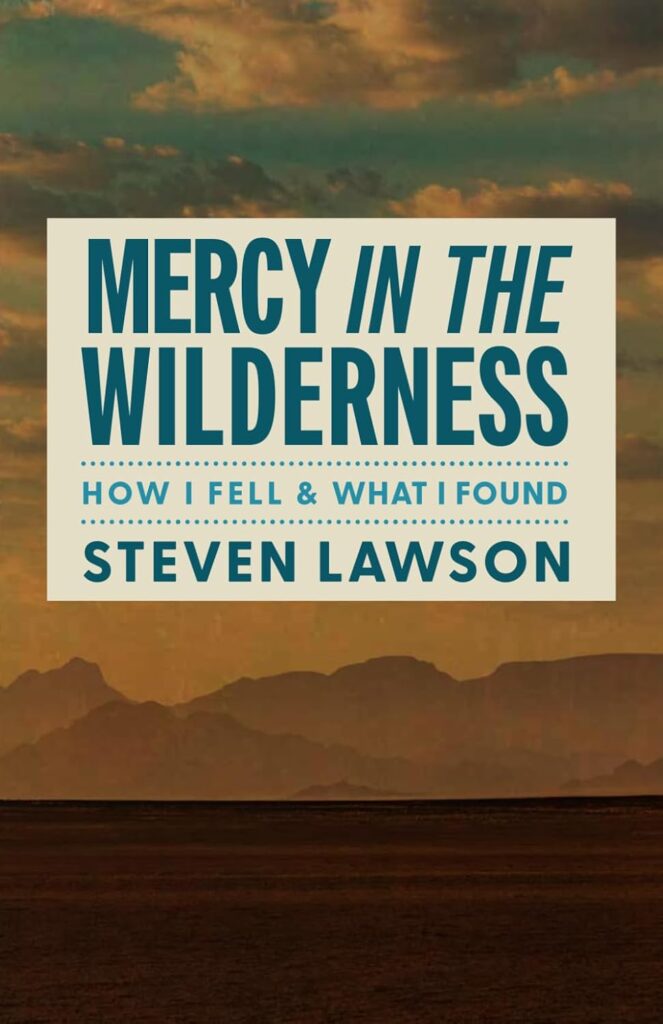
According to the book’s promo material:
“My giftedness exceeded my godliness. This is not a book of excuses or self-justification. It is an unflinching confession.
Once regarded as one of the most respected voices in biblical teaching, Steven J. Lawson watched his ministry, reputation, and relationships collapse under the weight of hidden sin. Rather than minimizing his failure, he opens his heart with remarkable honesty, revealing the deception of sin, the pain of repentance, and the transforming power of God’s grace.
Raw, deeply personal, and profoundly humbling, this is not simply the story of a man who fell, it is the story of a God whose mercy reaches further than our deepest failures. Ultimately, this book reminds us that while sin can devastate a life, God’s grace is always greater.”
The book introduction reads:

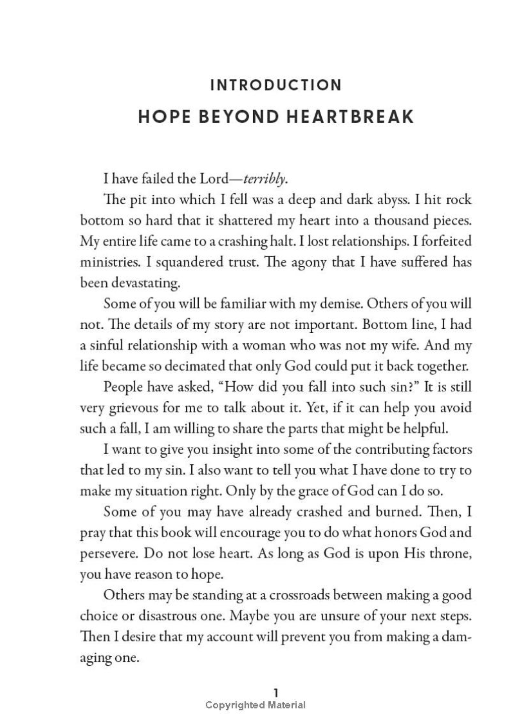
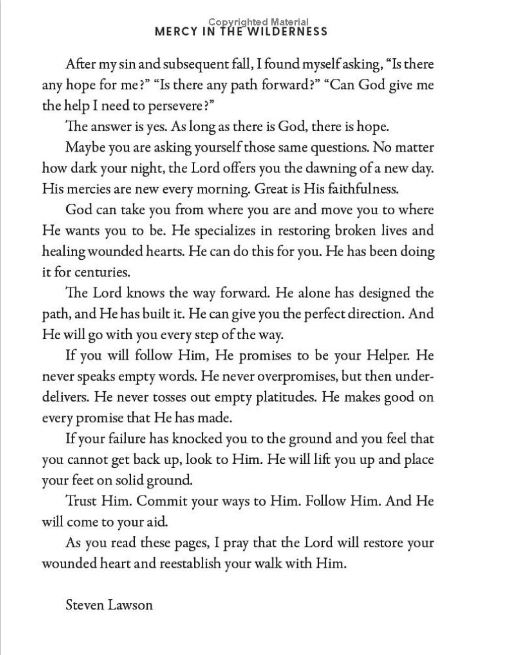
Lawson has released several sample pages of his book, where he reveals what led him to the state he was in.
I overloaded my mind and might, but neglected my heart and soul. My heart was withering within me. My shoulder was to the plow, but my knees were not bent before Him. I looked ahead, but I did not look up.
In my study are framed portraits of my heroes-John Wycliffe, Martin Luther, William Tyndale, John Calvin, Jonathan Edwards, John Knox, and Charles Spurgeon. On a side table is a framed print of George Whitefield. I have written biographies on each of these men, as well as Martyn Lloyd-Jones.
I lived with each of these men for an entire year as I researched their lives and ministries and then wrote about them. I discovered that they did the work of ten men, even twenty men. The sermons they preached, the books they wrote, and the miles they traveled became my gold standard.
These spiritual giants were far more gifted than I was, but I was determined to match their productivity. Therein lay much of my problem.
Without realizing it, I was more preoccupied with their output than with their uplook. I was more focused upon their industry than with their piety. My neglect left a gaping hole in my soul.
I had little fellowship with other believers. I had no sabbatical. No day off. No outside interests. No active hobby. No down time.
At home, I ate breakfast every morning in my study. I ate lunch every noontime at my desk. I came down for the evening after ten or twelve hours of sitting with my books. Then I just collapsed into my chair in the den, too exhausted to talk to my wife.
Even on family vacations, I was mentally consumed with my study. I neglected being engaging with them. I could not turn off the switch.
He continues:
My spiritual defenses were depleted. I was running on fumes. My soul was dry. My heart was sputtering. My body was tired. My brain was spent. The tread on my life was worn thin. I was an accident looking for someplace to happen.
And crash, I did.
These neglects contributed to the larger context of my sin. It has been said that men fall in private well before they fall in the eyes of the public. That certainly happened in my case. I was my own worst enemy.
I could exegete and outline a passage, but I did not apply it to my own life. Though I had a team of people enabling my productivity, I was lacking where it mattered most-in loving God and my family. Like the scribes and the Pharisees, I was straining out a gnat, but swallowing a camel. I majored on minors and minored on majors. I first lost the battle in my heart before I lost it elsewhere.
Recounting the moment the consequences of his sin hit him, he writes:
Before my crash, I seemed to be riding high. Everything was full speed ahead. All my labors seemed to be pulling together and taking off. The previous four decades of ministry had been building toward reaching these new heights.
Eight years of seminary and forty years of pastoral ministry were all soaring with maximum effectiveness. I was almost to the top of the ladder of success-or so it seemed. I was the president of an expanding ministry. The lead preacher of a rapidly growing church. The professor of preaching at a respected seminary. The dean of its doctoral program. A teaching fellow for an international ministry.I was the author of thirty-three books. The series editor of a line of biographies. The publisher and main contributing writer of a magazine. The speaker for four podcasts. The host and teacher of multiple conferences around the country and overseas.
I was leading church history tours overseas. I had just finished writing a two-volume, eighteen hundred-page, verse-by-verse commentary on Romans.
Here is the insanity.
I was doing all this ministry at the same time. Therein lay much of my problem. This was too much of what seemed to be a good thing. Every area of my life’s work had shifted into fifth gear. I was in a smooth sailing mode. Everything I did was growing and bearing fruit. Everything was on the upswing.
Then the drop:
But suddenly, all this came to a screeching halt. Having fallen into a sinful relationship and having my sin exposed pulled the rug out from under me. I face-planted onto the ground. I hit the bottom so hard, it knocked the breath out of me.
All my apparent success evaporated into thin air. It was as if God hit the delete button, and my entire life’s work was gone. In a moment, it became ancient history. Overnight, it was like it never happened. I knew there would be consequences, but I was unprepared to face them.
I was released from every ministry. I was banned from every pul- pit. I was cancelled by every publisher. I was shunned by people I had once considered friends-and even by loved ones.
Within days, I found myself living with my younger brother many miles away from my immediate family. In another state. With no ministry. No job. No salary. Nothing to do. Nowhere to go. No purpose. No direction…