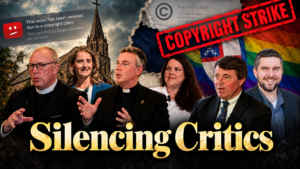

Last week, the Church Reform Initiative (CRI) learned the hard way how easily a copyright complaint can derail a successful documentary.
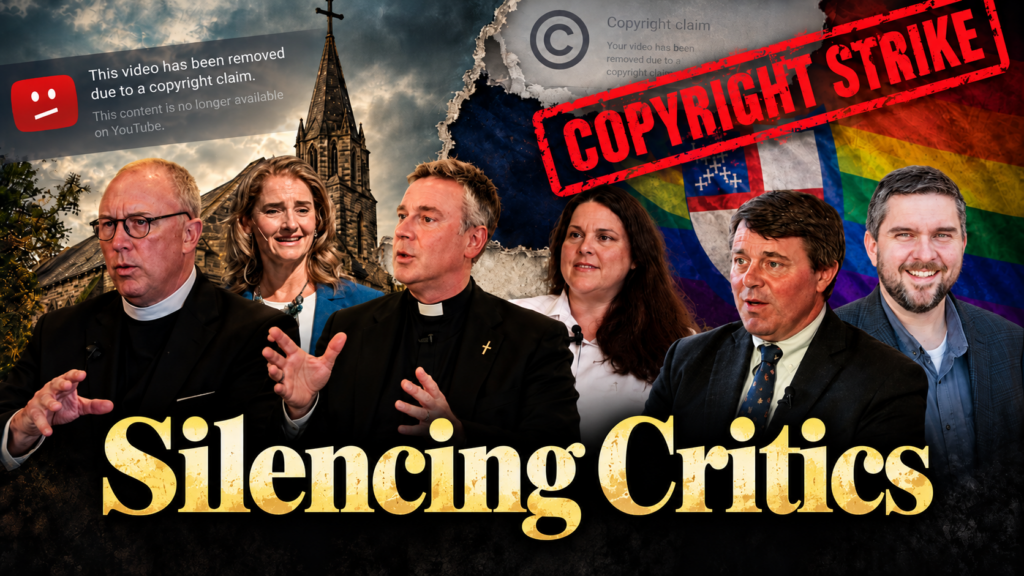
On October 6, CRI released All Are Not Welcome: The Downfall of the Episcopal Church and How to Reform Her, a documentary examining the denomination’s theological decline, featuring interviews with several Anglican and Episcopal figures.
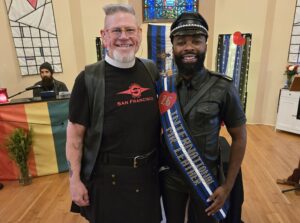
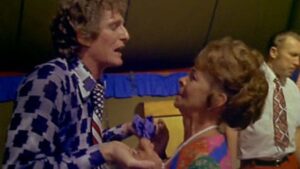
The documentary quickly accumulated around 40,000 views on YouTube before St. Michael and All Angels Episcopal Church in Albuquerque, New Mexico, filed a copyright complaint over a brief clip of Rev. Mike Angell discussing the Episcopal Church’s accommodation of homosexuality:

The offending material? Approximately 17 seconds of a documentary that used Angell’s own publicly available statements as evidence of the theological problems being examined.
In other words, exactly the sort of thing documentaries and news organizations do every day.
YouTube notified CRI that it had seven days to remove the documentary or face a copyright strike and forced removal. CRI contacted YouTube support, explaining that its use of the footage was protected under federal fair use law, and requested that someone actually examine the circumstances before taking down the video.
Which of course, YouTube wouldn’t do.
According to correspondence reviewed by Protestia, YouTube support informed CRI that there was no preemptive appeal available. They could delete the video, convince the church to withdraw its complaint, or let the takedown happen and file a counter-notification afterward.
Faced with losing a documentary that had already reached tens of thousands of viewers, CRI removed the original and uploaded an edited version without the disputed footage:
Conversations That Matter host Jon Harris later described the situation on Substack, expressing understandable frustration that YouTube would allow a copyright complaint to interfere with a documentary engaged in criticism and commentary.
But here’s the thing: YouTube’s response, while frustrating, was largely consistent with how the Digital Millennium Copyright Act (DMCA) is designed to operate. And that’s where the real problem begins.
How the DMCA Actually Works
Most people don’t understand how much power a copyright complaint gives someone who wants material removed from the internet.
The DMCA, passed in 1998, established a process allowing copyright holders to submit takedown notices to platforms hosting allegedly infringing material.
Under 17 U.S.C. § 512, platforms like YouTube and X receive substantial protection from copyright liability when they comply with the statute’s requirements, including responding expeditiously to legally sufficient removal requests.
Importantly, YouTube isn’t a court, and it isn’t required to adjudicate fair use disputes between copyright holders and the people criticizing them.
If a complaint appears legally sufficient, YouTube generally removes the material rather than independently determining whether the claimant would actually win a copyright lawsuit. On YouTube, depending on the complainant’s selections, a scheduled takedown gives the creator seven days to delete the video or secure a retraction before the strike takes effect.
If the creator believes the use is lawful, including because it qualifies as fair use, he can submit a formal counter-notification.
Here’s the catch: YouTube won’t accept that counter-notification until AFTER the video has been removed and the copyright strike has been applied.
At that point, the counter-notification is forwarded to the claimant, who gets an opportunity to initiate legal action. If no qualifying lawsuit is reported to YouTube within 10 days of the counter-notification, the content generally gets restored within 10–14 business days after receipt of a valid counter-notification.
X operates under the same federal framework, although its particular enforcement procedures differ. So consider what this means.
Someone who doesn’t like a video criticizing him can file a copyright complaint. The platform accepts it, and the video comes down. The creator then has to begin the process of getting it restored, potentially losing weeks of exposure while waiting for the system to run its course. And in many cases, the claimant doesn’t have to do anything else.
Protestia has been through this process many times on both YouTube and X. All but one of our counter-notifications have been successful, but even when we’ve prevailed, the content has been offline for approximately ten days.
That’s ten days of lost engagement in an internet ecosystem where ten days is far longer than most viewers’ attention can possibly be held. If you’re covering a developing controversy or releasing a documentary, ten days might as well be ten years.
Thus, the complaint itself becomes the punishment.
Of course, not every copyright complaint is illegitimate, and actual infringement deserves appropriate remedies. But the system also creates an enormous opportunity for someone who wants to suppress criticism without ever having to demonstrate infringement before a judge.
Fair Use Isn’t Some Obscure Loophole
Here’s another thing people frequently misunderstand: copyright ownership doesn’t mean you get to dictate everything anyone else can do with your material.
Under 17 U.S.C. § 107, fair use explicitly protects certain uses of copyrighted material, including criticism, commentary, news reporting, teaching, scholarship, and research.
There are four factors courts consider: the purpose of the use, the nature of the original work, the amount used, and whether the new use harms the market for the original.
There is no magical number of seconds or percentage of a video that automatically qualifies as fair use. But when a documentary takes a short excerpt from someone’s public statements and uses it to criticize those very statements, we’re dealing with one of the most obvious reasons fair use exists in the first place.
The purpose is not to replace the original video. It’s to examine what the speaker said. That’s exactly what CRI was doing with the footage of Angell.
And while we can’t know from the complaint alone whether the church’s leadership genuinely misunderstood fair use or simply wanted the criticism removed, the effect was the same: a documentary criticizing the Episcopal Church lost its original distribution because an Episcopal church objected to the use of a short excerpt. The irony is difficult to miss.
Copyright Claimants Have Legal Obligations, Too
The DMCA doesn’t simply give copyright holders a magic button they can press whenever someone publishes something they dislike.
In Lenz v. Universal Music Corp., the Ninth Circuit held that copyright holders must consider fair use before filing a DMCA takedown notice. That doesn’t mean the claimant has to predict exactly how a court would rule. But he must actually consider whether the disputed material is legally authorized and form a genuine good-faith belief that infringement has occurred. Knowingly misrepresenting infringement can also create liability under Section 512(f).
In other words, there’s a difference between sincerely getting the law wrong and knowingly making a false accusation. That difference matters legally. It should matter morally, too. Because if you’re submitting a legal complaint against someone, you’re making an accusation that could have serious financial and reputational consequences.
And if you’re making that accusation dishonestly because you don’t like what someone said about you, you’ve moved well beyond defending your intellectual property. You’re abusing the law to censor a critic.
Julie Roys Tried This With Protestia
We’ve experienced this firsthand.
Earlier this year, Julie Roys used YouTube’s copyright system to have police body-camera footage removed from a Protestia article.
The footage involved Steve and Heidi Nichols speaking with a Seminole County Sheriff’s deputy. Roys presumably obtained the footage through a public-records request and published it in connection with Daniel Silliman’s reporting.
We subsequently uploaded the same footage to our YouTube channel, retaining Roys’ watermark and identifying the source. Roys’ channel filed a copyright complaint, and YouTube removed our copy.
Now, whatever legal arguments might be advanced concerning original material added to a video, paying a sheriff’s office $150 to retrieve and prepare public records doesn’t magically confer ownership of the underlying footage. More importantly, when I contacted Roys and asked her to retract the complaint, she revealed what was really bothering her.
She wrote that she believed Protestia did more harm than good and took liberties with the truth, adding:
“I don’t want anything with our branding on your site.“
That’s nice, but disliking Protestia doesn’t grant Julie Roys copyright interest in the publicly owned footage, and copyright law doesn’t exist to ensure your branding only appears alongside people you approve of.
If Roys doesn’t like Protestia’s reporting, she’s welcome to criticize it. We certainly haven’t hesitated to criticize hers. What she isn’t entitled to do is use YouTube’s copyright machinery simply to keep material away from a publisher she dislikes.
We challenged the removal through the DMCA counter-notification process, but our copy remained unavailable while the dispute was processed (of course, I simply embedded her copy, so her branding was still on our site).
Then There’s Pastor Charles Huckaby
A more recent example involves Charles Huckaby, pastor of Ramah Baptist Church, and it’s particularly troubling because Huckaby is someone we recognize as a fellow Christian and church elder.
I recently posted a screenshot from Ramah Baptist Church’s publicly available 78-minute worship livestream on X.
The screenshot accompanied commentary criticizing Scott Aniol, who had been attending Ramah rather than his own church, despite previously denying members of his own congregation similar freedom.
That’s it. One frame from a publicly available church service, presented as evidence supporting criticism. Huckaby responded by submitting a DMCA copyright complaint against the post.
His complaint emphasized that the image had been reproduced without cropping or alteration, apparently treating the accurate reproduction of the screenshot as evidence of infringement. Of course, accurately preserving the evidence is precisely what responsible documentation requires. Cropping or altering the screenshot wouldn’t somehow make the criticism more legitimate.
The screenshot wasn’t being sold, reproduced as a substitute for the worship service, or used to distribute the church’s copyrighted material in any commercially meaningful sense. It was documentary evidence accompanying my commentary. This is fair use 101.
But the most remarkable part of Huckaby’s complaint was what the copyright system required him to do. He had to identify himself.
The DMCA process required information identifying the claimant and his authority to make the accusation, along with a signed good-faith representation that the challenged use was unauthorized.
He couldn’t simply mail an anonymous accusation and expect the platform to act without anyone accepting responsibility. And knowingly making a material misrepresentation of infringement can create liability under federal law.
If you’ve followed our reporting about G3 Ministries, Scott Aniol, Josh Buice, and the accusations made against Tom Buck, you should recognize the irony immediately.
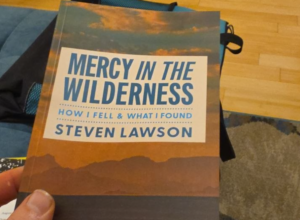
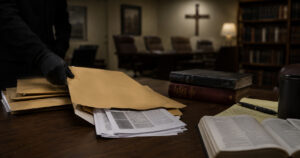
In that controversy, anonymous packets containing accusations against Buck were mailed using First Baptist Church Lindale return labels, creating the appearance that the accusations originated from, or carried the involvement of, Buck’s own congregation.
The men involved sought consequences for Buck while concealing the identities of the accusers.
Ramah’s other pastor, Laramie Minga, is G3 Ministries’ Director of Operations. To be clear, we have no evidence that Minga prepared or mailed those packets, and we are not accusing him of doing so.
Nevertheless, the institutional irony is breathtaking.
The federal government’s copyright process required Huckaby to identify himself and accept responsibility for his accusation, a standard of accountability that the men involved in the Tom Buck affair failed to demonstrate.
Apparently, Caesar understands that an accuser ought to put his name on an accusation. And the church of Jesus Christ should have a higher standard of justice than X’s copyright department, not a lower one.
But Huckaby’s own conduct deserves criticism apart from that irony. His complaint attempted to use copyright law to remove a single screenshot serving as evidence in a critical post. The claim misrepresented the nature of the use, and I demanded its retraction while pursuing the counter-notification process.
Huckaby was perfectly free to disagree with my commentary about Aniol. He could have responded publicly, argued that I had misrepresented the circumstances, or explained why my criticism was unfair.
Instead, he sought to have me censored through a copyright complaint. For a pastor who ought to understand the importance of truthfulness and accountable accusations, that’s shameful.
A False Copyright Claim Is Still False Witness
Christians ought to pay particular attention here. Not everyone who calls himself a Christian is one, and we certainly don’t operate under the assumption that every pastor, journalist, or ministry figure we report on is a genuine believer.
Some of the people whose conduct we document have theological positions that fundamentally contradict biblical Christianity. We should hardly be surprised when lost people fail to obey. But we can still recognize dishonesty as dishonesty, regardless of who commits it. And when the person making a dishonest accusation is someone we recognize as a Christian, particularly an ordained minister, the matter becomes even more serious.
The Ninth Commandment is not suspended because someone thinks his ministry is being unfairly criticized.
“You shall not bear false witness against your neighbor” (Exodus 20:16). Proverbs 12:22 tells us that lying lips are an abomination to the Lord. Ephesians 4:25 commands believers to put away falsehood and speak truth with their neighbors.
These aren’t complicated principles. If you knowingly file a false copyright complaint to have someone’s criticism removed, you are making a dishonest accusation against your neighbor.
You’re asking a third party to punish him based on a representation you know is untrue. The fact that the accusation appears in a government-prescribed copyright notice rather than a church meeting doesn’t change its moral character.
And if you’re a pastor, you don’t get to excuse it by appealing to the importance of protecting your ministry or your reputation.
Titus 1 requires elders to be above reproach. First Peter 5 warns shepherds against domineering conduct. A man who uses dishonest accusations to suppress criticism is not exhibiting the character required of a shepherd.
To be clear, Christians can legitimately pursue copyright claims. A pastor whose sermon has been stolen, commercially redistributed, or otherwise unlawfully exploited is not sinning simply by seeking appropriate protection.
Likewise, someone who sincerely misunderstands fair use is not necessarily guilty of deliberately bearing false witness.
But when a person knowingly misrepresents the facts or the basis of his claim to get someone else’s work removed, the fact that a platform accepts the complaint doesn’t make the accusation truthful.
You cannot turn false witness into righteousness by submitting it through YouTube’s copyright department.
If You Don’t Like the Criticism, Answer It
The broader problem is that copyright enforcement has become an attractive alternative to actually responding to criticism.
A pastor doesn’t like a clip circulating from his sermon? File a copyright complaint. A ministry doesn’t want embarrassing footage appearing in a documentary? File a copyright complaint. A journalist doesn’t want a competing publication circulating source material? File a copyright complaint. A church leader doesn’t appreciate a screenshot being used to document criticism? File a copyright complaint.
And because the platforms like YouTube and X have strong legal incentives to act quickly, those complaints can produce immediate consequences even when the challenged material is clearly protected under fair use doctrine. Meanwhile, the content creator bears the burden of fighting to get it restored.
This is not how copyright law is supposed to function. Its purpose is to protect legitimate intellectual property rights, not give public figures editorial control over what others can say about them.
And Christians should understand something particularly important: public teaching is subject to public examination.
When a pastor preaches a sermon, publishes a video, speaks at a conference, or makes a public statement, other people have every right to examine his words and criticize them. That examination will often require quoting him, showing a screenshot, or playing a brief clip.
Fair use exists in part to prevent copyright ownership from becoming a veto over criticism.
If someone misrepresents your teaching, demonstrate the misrepresentation. If someone makes a false accusation, answer it with evidence. If someone makes an unfair theological argument, respond from Scripture. But don’t pretend that someone has committed copyright infringement simply because you don’t appreciate his commentary.
The Bottom Line
The Church Reform Initiative controversy illustrates how easily a documentary can lose its initial momentum because someone objects to a short clip being used in criticism.
Our experiences with Julie Roys and Charles Huckaby (not to mention the recent strikes Baptist Press issued against us and lost) demonstrate how the same legal mechanism can affect independent Christian journalism on both YouTube and X.
The DMCA includes safeguards intended to discourage false accusations, but those safeguards are often too slow to prevent the immediate damage caused by a takedown.
That’s a problem with the system.
But knowingly exploiting that weakness to silence criticism is a problem with the person doing it. And for pastors and other professing Christian leaders, there is no excuse for misrepresenting a copyright claim simply because the target is someone they dislike.
You don’t have the right to lie about infringement to silence criticism. You don’t have the right to turn copyright law into a personal censorship mechanism. And you certainly don’t have the right to bear false witness against your neighbor because you don’t like what he’s saying about you.
The fact that YouTube or X might take your complaint seriously doesn’t mean God approves of it.
The Ninth Commandment still applies when you’re filling out a DMCA form.