
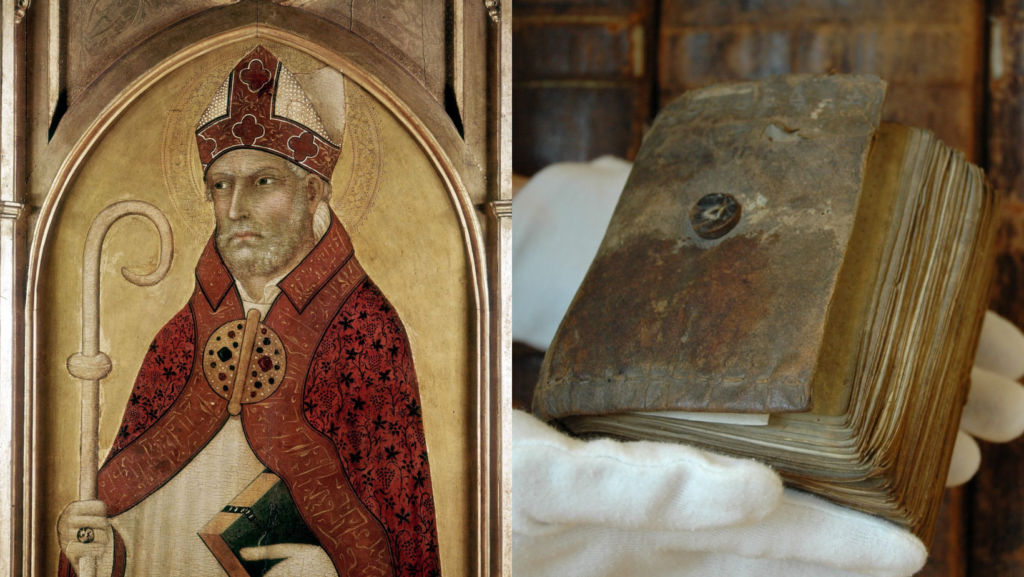

A Latin scholar from the University Würzburg has discovered and translated two new sermons by St Augustine of Hippo, according to the press release from the storied University.
One day in 2024, the telephone of Professor Christian Tornau, a Latin scholar at the University of Würzburg, rings: an employee of the Bad Doberan Monastery Association in Mecklenburg-Western Pomerania asks him to decipher a manuscript from the 12th century that originally belonged to Bad Doberan Abbey but is now kept in its daughter monastery in Pelplin, Poland. The manuscript contains six sermons by the Christian church scholar Augustine of Hippo (354-430).
What initially looks like a normal philological assignment turns into a discovery: “Two of the six sermons are previously undiscovered writings by Augustine,” says Professor Tornau, delighted with the unexpected find.
The sermons, preached more than 1,600 years ago, are based on the account in 1 Samuel 28 concerning the mysterious Witch of Endor who summoned the spirit of Samuel at King Saul’s request. This passage has led preachers and teachers to debate its meaning and possibility for thousands of years, with Augustine being no exception.

The press release fur

The story raises a theological question: “Why can a necromancer summon the spirit of a prophet? This in turn opens up the theodicy problem: how can an omnipotent God allow this or is he not really omnipotent?” says the Latin scholar. There are two interpretations in theology: Either it must be a deception on the part of the witch, or God allowed the incantation to warn Saul of certain death.
The sermons play with these interpretations. “The first was preached during the Sunday service and ends with the theodicy question and the interpretations. It was not until the second sermon on the following Wednesday that the options were weighed up,” says Tornau. The church audience was therefore given a certain amount of freedom to form their own thoughts on the biblical passage.”
The University and Tornau are working with CSEL (Corpus Scriptorum Ecclesiasticorum Latinorum) to release a book based on the manuscripts later this year.


















2 responses to “Two New Sermons by St Augustine, About the Witch of Endor, Discovered in Polish Monastery”
We got new Augustine before gta 6
Bruh 😂