
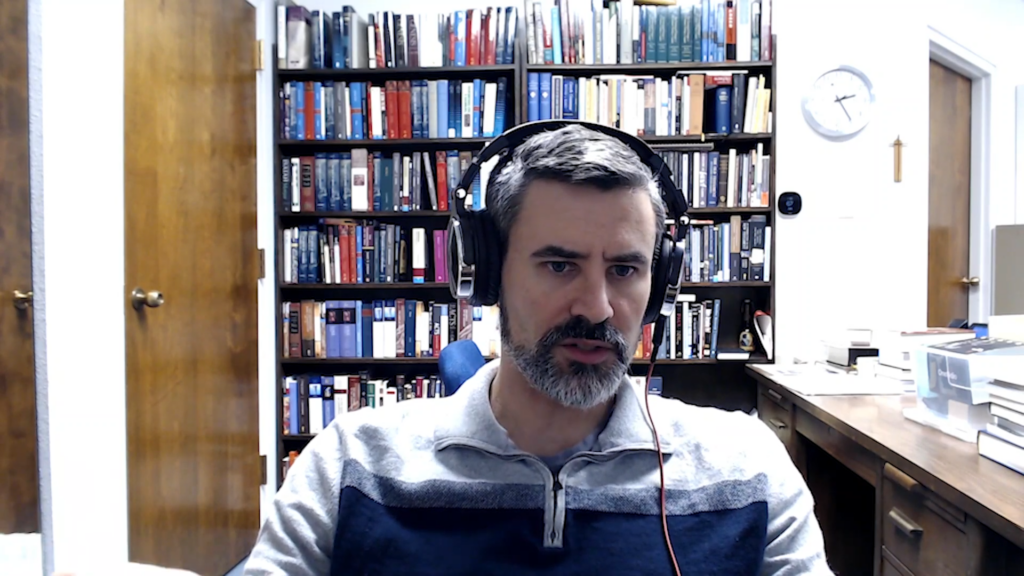

Zachary Garris is the pastor of Bryce Avenue Presbyterian Church, a PCA congregation in White Rock, New Mexico.
Recently, he was subjected to an ecclesiastical trial by the Rio Grande Presbytery over comments he made on ‘Twitter/ X’ years ago about slavery, as well as a rebuttal to Anthony Bradley in which he was accused of using “unwholesome speech.”
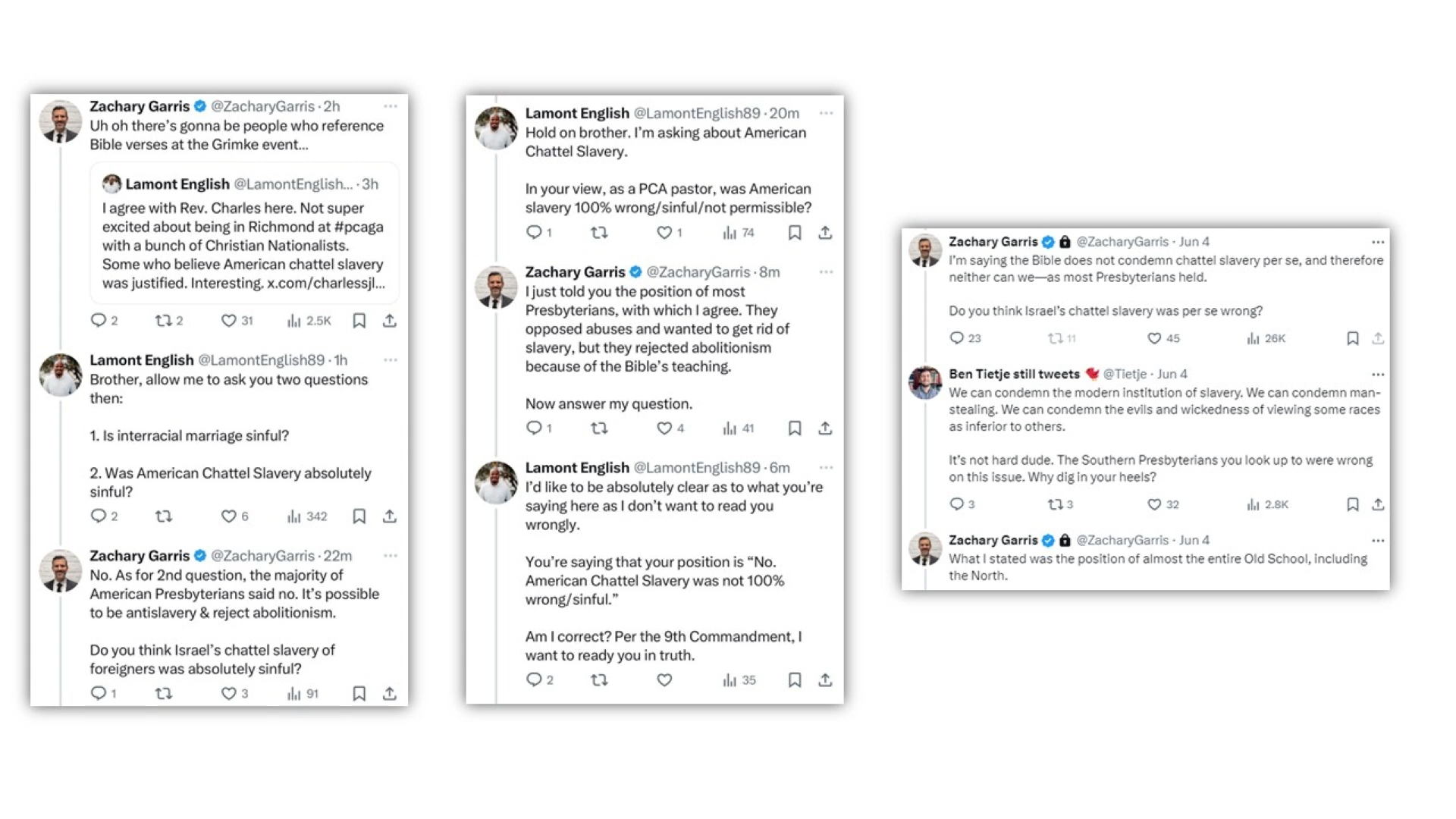
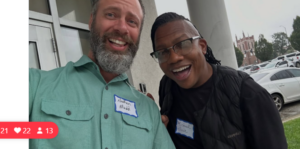
Garris was cleared of the first charge of making racial comments in this interaction with Lamont English, an Assistant Director at the Presbyterian Church in America’s mission agency Mission to the World.
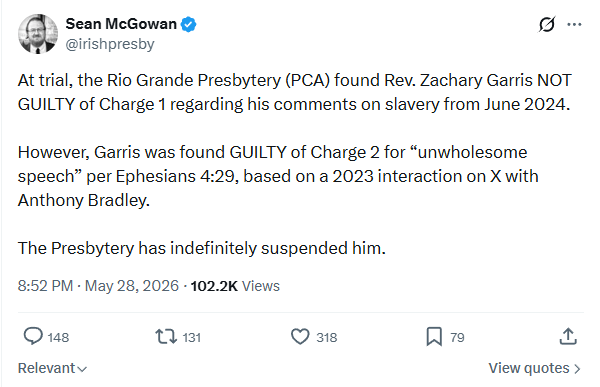
However, he was found guilty of the second charge, resulting in the court assigning censure.
While the Presbytery could have just admonished Garris, they instead suspended him indefinitely.

Garris says he plans to appeal.
But what specifically did he say that got him suspended? According to Sean McGowan:
Charge Two. Violating the command to “let no corrupt word proceed out of your mouth, but what is good for necessary edification, that it may impart grace to the hearers.” (Ephesians 4:29, see II Corinthians 13:10).
Specification 1. That on or about October 9, 2023, TE Garris did post on X, a public forum, a comment stating, “Even here you only speak of ‘some’ situations. Sometimes things are more complex than a PhD can handle.”
Specification 2. That on or about October 8, 2023, TE Garris did post on X, a public forum, a comment stating, “You started by misusing a Bible verse and then calling others ‘biblically illiterate’. But arrogance can’t tolerate banter.”
Ie:
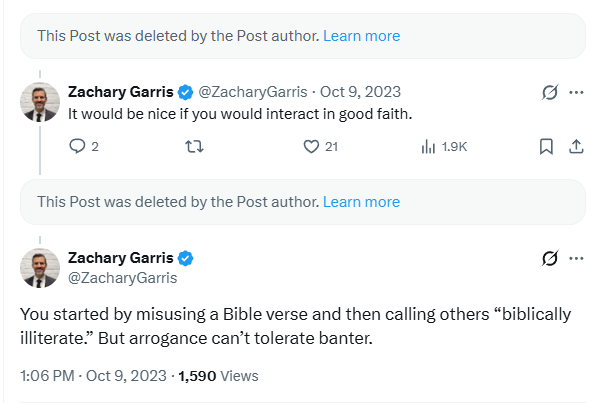
Reportedly, that is the sum of his supposed sin.
Notably, Bradley is known for his obstreperous behavior and frequently biting and antagonistic social media statements, which results in the occasional terse response from many he interacts with.
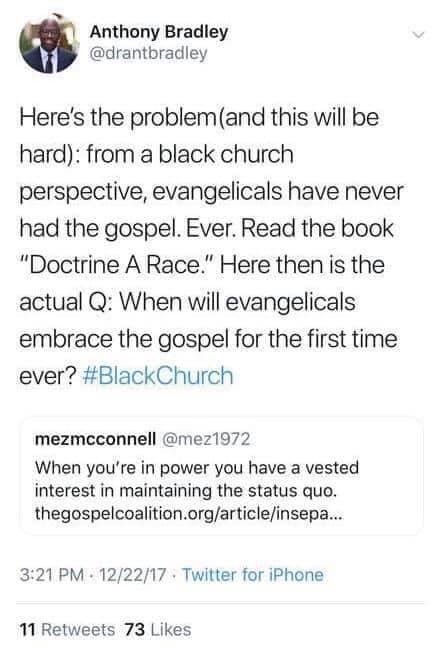
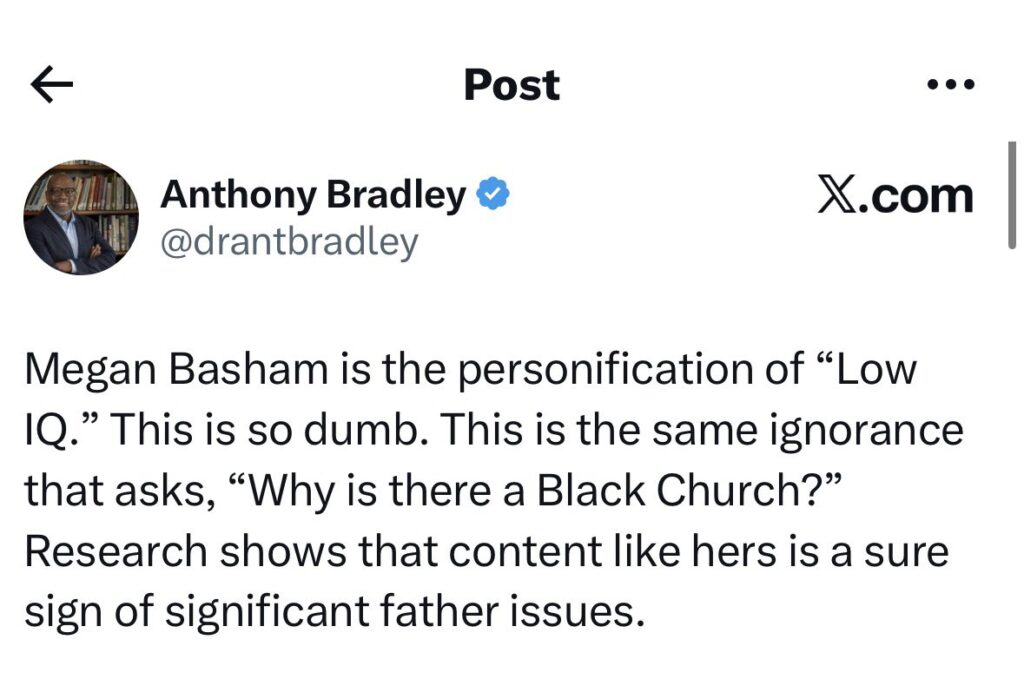
While the vast majority of respondents on social media have been outraged by the charges and examples used, pointing out this isn’t even unwholesome speech and that his Presbytery should be ashamed, the indictments and trial arguments have not been released, resulting in some taking a “wait and see ” approach to determine if the suspension is as truly undeserved as it appears.













10 responses to “PCA Pastor Zachary Garris Suspended Over Supposed ‘Unwholesome Speech’”
Makes one wonder would they have done to Jesus because He used a lot harsher speech. He slammed the scribes and pharisees, calling them fools (because they were in fact fools) and such, right at the dinner table. He didn’t just rebuke them, He rebuked them harshly. And that is when they began to target Him and try to trap Him. (Luke 11:37-54). He called them all sorts of harsh names. He spoke with authority, often sternly. As did the Apostles.
What concerns me is the wrong interpretation of scripture in such a manner that it would conflict with itself. If their definition of “corrupt” or “unwholesome” would make Jesus guilty of sin, then there’s an obvious problem. Scripture is full of examples of righteous and godly men who spoke harshly when necessary, and for good reason.
The definition and meaning of “unwholesome speech” must not conflict with any other scripture. It especially must not conflict with the Lord’s example. It must not conflict with the example set by the Apostles. If the interpreted meaning does conflict, then the interpreted meaning is wrong. It must be in accordance with the commandments of God, and not the commandments of men. A man cannot serve two masters. We either please the Lord or we please the world. But we cannot please both. It doesn’t matter what you say, somebody isn’t going to like hearing it and somebody is bound to take offense. The question is who are you going to offend …
As far as the issue of slavery is concerned, the answer to that question is staring them all right in the face, on both sides of that debate. The answer is found in understanding the Gospel, and what it means to be born again, indwelled by the Holy Spirit, with the implanted word, such that a man can self-govern. Under the law, men must be constrained by other men. Under the law, the wickedness and corruption from creation is not cured, but is rather contained. But because of Jesus we can be free. Because of the work of the Holy Spirit, the corruption and wickedness within is overcome, such that we do not need to have anyone else standing over us making sure we do what’s right, because we will do what’s right of our own accord. Because of the work of the Holy Spirit, to heal the corruption and wickedness inherent from the sin of Adam, we don’t need to be constrained or imprisoned by other men. So to understand why the Bible treats slavery as it does one must understand the Gospel, and understand the difference between being under the law vs being born again.
That previous post was not meant to imply that slaves were worse people than their owners. (though that was one of the main arguments of those who, from the Constitutional Convention to the time of the Civil War, fought against outlawing slavery). That is not what I’m saying. And that wouldn’t be true any more than it would be true to call politicians who make law the most righteous individuals who ever lived (laugh here). I’m talking about the general condition of creation and of mankind from the fall, the condition of being constrained “under the law”, which is to be constrained by and under other men, and how that condition is addressed by the Gospel of Jesus Christ.
We should default to encouragement, giving one another the benefit of the doubt, unless there is good reason not to encourage. And that dividing line is established by the commandments of God, what is or is not sinful, and by what is true or false (which is the context of Eph. 4:29). We cannot justify wickedness, defying the commandments of God. To do so is abominable sin (Prov. 17:15) We must first love Him, and only then can we truly love one another. And we cannot engage in falsehood – those who do are condemned (Rev. 21:8, Rev. 22:15, etc.).
There is a time to encourage and there is a time to harshly rebuke. And God’s word gives us a very clear explanation of which is which, when and why.
Further, we must remember that it is not a sin to be wrong about something. We’re imperfect human beings. We’re wrong all the time. I say something wrong just about every day of my life. And for this we should refer back to scripture such as Deut. 19, in order to understand the principle. Where when someone is found to have made a false claim, then an inquiry is done to determine whether or not that false statement was malicious.
This is how I see it. Plain and simple. Default to encouraging and uplifting speech unless there is good reason and necessity not to do so, as scripture defines those good reasons and circumstances where we must not be encouraging, but must rather call others to repentance, and at times must harshly rebuke, particularly the longer the refusal to repent continues. Right. 1 Tim. 5:20, etc. – when there is persistence in sin, then the harshness and severity of the rebuke must be commensurate to that persistence in sin.
I’m sure I don’t have it all figured out. I’m sure my interpretations are not all correct either. But this is closer to alignment with scripture than the interpretation of Eph. 4:29 that is out of context to, and in conflict with, the whole of scripture. When we understand the factors that determine when, why, and how we should use harsh language, then we can see that scripture does not conflict, see that the Lord did not conflict with himself, that the Apostles did not conflict with themselves, and can follow those examples.
Default to encouragement unless we should and must do otherwise.
tektoon’s self appointed expert novels strike again
Seems to me you’re telling on yourself there Mr. prideful self-appointed expert, bent on silencing everybody he disagrees with.
[…] Protestia and Evangelical Dark Web provide additional detail. […]
[…] PCA Pastor Zachary Garris Suspended Over Supposed ‘Unwholesome Speech’ […]
If that’s “unwholesome speech” then I guess I’m going to H E, double hockey sticks.
Church discipline is very rare nowadays. Too bad…
[…] own book on masculinity and David’s mighty men sometime later this year. Earlier this week he was suspended indefinitely by the ecclesiastical authorities in the Rio Grande Presbytery of the Presbyterian Church in […]