
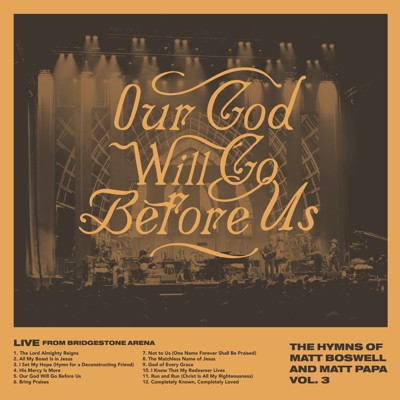
Matt Boswell and Matt Papa’s “His Mercy Is More” has become one of the most widely adopted modern hymns in conservative evangelical churches. Released in 2019 and popularized through Getty Music’s hymn ministry, the song aims squarely at the biblical themes of sin, atonement, forgiveness, and divine mercy. Unlike much of the modern worship market, it does not attempt to manufacture a spiritual experience. It simply proclaims a gospel truth: our sins are many, but God’s mercy in Christ is greater. (Worship Together)
Note: For a full explanation of the rubric and a primer on our scoring methodology, click here.
Doctrinal Fidelity and Clarity:
The song’s greatest strength is that it refuses to minimize sin while simultaneously magnifying grace.

The opening verse asks:
“What love could remember no wrongs we have done”
and continues with:
“Our sins they are many, His mercy is more.”
This is biblical language drawn from passages such as Psalm 103, Micah 7, Romans 5, and Lamentations 3. The song does not portray humanity as merely broken, wounded, or struggling. We are sinners under a debt we could never afford.
The third verse is especially strong:
“His blood was the payment, His life was the cost.”
That is unmistakably substitutionary atonement. There is no therapeutic gospel, no vague “breakthrough” language, and no suggestion that mercy comes apart from Christ’s sacrificial death. (Worship Together)
The only reason this category is not perfect is that the song never explicitly names Jesus Christ. The atonement language makes His identity obvious to Christians, but direct Christological naming would have strengthened it further.
Score: 23/25.
Doctrinal Specificity:
Many modern worship songs speak generally of love, grace, freedom, and hope. “His Mercy Is More” grounds those concepts in the reality of sin and redemption.
The song repeatedly contrasts our guilt with God’s mercy:
“We stood ‘neath a debt we could never afford.”
That language effectively excludes Pelagian, moralistic, and self-salvation interpretations.
Could a generic theist sing this song? Not comfortably. Could a prosperity preacher sing it? Perhaps, but he would have to sing against the grain of his own message. The song’s central theme is not victory, destiny, influence, blessing, or breakthrough. It is forgiveness purchased through blood.
Again, explicit mention of Christ would elevate the score even higher.
Score: 17/20.
Focus:
This is where the hymn excels.
Notice how little attention is given to the worshiper’s emotional state. The song does not invite us to admire our sincerity, our passion, or our response. Instead, every verse highlights God’s attributes and actions:
- His omniscience.
- His patience.
- His fatherly tenderness.
- His kindness.
- His atoning sacrifice.
Even the chorus is fundamentally God-centered:
“Praise the Lord, His mercy is more.”
The song gives the congregation something objective to sing about. Worship is directed toward God’s character rather than the worshiper’s experience.
This is the opposite of the “Jesus is my boyfriend” genre and a welcome corrective to contemporary worship’s obsession with self-expression.
Score: 20/20.
Association:
Matt Boswell and Matt Papa generally occupy a different theological ecosystem than Bethel, Elevation, Hillsong, Gateway, and similar ministries. Their work has been heavily connected with Getty Music, hymn writing, and doctrinally rich congregational singing. (Wikipedia)
No ministry is beyond criticism, and broad evangelical partnerships always warrant some caution. Nevertheless, compared to the dominant CCM industry, Boswell and Papa have established a reputation for writing gospel-centered hymns rather than emotional products.
There is no obvious associational issue that would disqualify this song.
Score: 18/20.
Musical Value:
The melody is accessible, memorable, and highly singable for ordinary congregations.
More importantly, the repetition serves a theological purpose. Every return to:
“Our sins they are many, His mercy is more”
reinforces the central truth rather than compensating for a lack of lyrical content.
The tune is not groundbreaking musically, but it does not need to be. It functions as a congregational hymn first and a performance piece second. That alone distinguishes it from much of the modern worship catalog.
The arrangement supports the text rather than overwhelming it.
Score: 13/15.
Total Score:
91/100
Safe for Sunday. If you like it, program it.
“His Mercy Is More” is one of the stronger modern hymns to emerge from the last decade. It is doctrinally substantial, congregationally useful, gospel-centered, and focused on God’s mercy toward undeserving sinners. While explicit mention of Christ would strengthen an already excellent lyric, this is the kind of song that earns its place in corporate worship rather than merely occupying it.
If a church is looking for modern songs that can stand alongside historic hymns without embarrassment, “His Mercy Is More” is one of the better examples available today.