


Well, this is awkward.
The former Pray’s Mill Baptist Church elders and G3 Ministries board members have now admitted that they were behind the anonymous plagiarism dossier sent around the country targeting First Baptist Church Lindale pastor Tom Buck. Sort of.
Their admission came wrapped in a carefully constructed apology that preserved one very important proposition: Tom Buck was still guilty. Or, at minimum, the underlying accusation was legitimate and he was rightfully charged. Their sin, according to their telling, was largely one of process. They had a legitimate concern, but they handled it foolishly. They should not have acted anonymously. They should have approached Buck and his church differently. They should not have “meddled” in another church’s disciplinary process.

That last characterization is particularly slippery, because there was no disciplinary process for them to meddle in until they deliberately and covertly attempted to create one.
They didn’t wander into an existing FBC Lindale disciplinary matter and improperly interfere with it. They secretly schemed to compile allegations against Lindale’s pastor, mailed them anonymously to the church’s elders and deacons using FBC Lindale return labels, and distributed them elsewhere, all while concealing who was behind the operation. Their actions were intended to provoke action against Buck.
Calling that “meddling in the disciplinary process” is not confession. It is a material reframing of what happened. The practical message of their apology is much simpler: Tom was guilty of disqualifying sin; we just should have handled it better.
Exposing the “public sin against the broader body of Christ” (as they characterized it) was the only plausible motivation for sending the packets at all. There was and is no plausible reason to have done it anonymously. Until now.
Running Their Own Test on Them
A new analysis, examining recent sermons preached by Pray’s Mill elders Scott Aniol, Dylan Joyner, and Matt Sikes, using a more conservative methodology than they applied to Buck revealed at least 17 examples of commentary usage that, according to them, constitute “presenting another person’s words, ideas, and creative expressions as one’s own,” and that “demands public repentence.” As with the Buck packet, we have independently checked all 17 examples against the sermon material.
The parallels are solid.
Before anyone gets ahead of us, let’s be crystal clear: We are not accusing Scott Aniol, Dylan Joyner, or Matt Sikes of plagiarism. In fact, that’s the point. We don’t believe these examples establish that they are plagiarists any more than I believe the G3/PMBC packet established that Tom Buck is some sort of serial sermon thief.
There is an important distinction here. Some of the strongest examples against Buck involved actual word-for-word or nearly word-for-word commentary language. We have not found comparable extended verbatim copying among these 17 sermons.
But these guys didn’t stop there. Their standard was extraordinarily broad. They counted close paraphrases, distinctive exegetical observations, illustrations, argument sequences, secondary-source material, and, critically, structural frameworks. Their moral indictment of Buck depended upon all of those categories, not merely instances where he repeated a commentary sentence too closely.
Fine. That’s the standard we’re using. Not ours. Theirs.
Take Scott Aniol’s January 18, 2026 sermon on Exodus 2, “The Birth of the Deliverer.” Philip Graham Ryken’s Exodus: Saved for God’s Glory develops a particular series of observations. Moses is described as “good,” evoking the creation language of Genesis 1. The “basket” into which Moses is placed is the unusual Hebrew word used elsewhere for Noah’s ark. That establishes a Noah/Moses parallel involving preservation through the waters of judgment. Moses is then the one “drawn out,” who himself becomes God’s instrument of deliverance.
Aniol follows that same trail. He identifies the Hebrew tov—“good”—and takes the congregation to Genesis 1. He explains that the Hebrew word translated “basket” occurs in one other Old Testament narrative: Noah’s ark. He notes the same waterproofing technique and then spends several minutes developing the Noah/Moses/waters-of-judgment connection. Later, Moses’s name becomes significant: he is the “drawn out one,” who is “saved so that he can save” and “delivered to deliver.”
Is Scott Aniol a plagiarist? No. At least, I see no reason to call him one.
A pastor read Ryken, learned things from Ryken, incorporated those things into his understanding of Exodus, and preached them. Congratulations. We have discovered sermon preparation.
Unfortunately, Scott Aniol and the Pray’s Mill elders already wrote the rules for this game. According to those rules, following a commentary’s distinctive exegetical arguments and structural framework without sufficient attribution is evidence demonstrating disqualifying plagiarism.
And it isn’t just one sermon. Aniol’s July 2025 sermon on Luke 19 follows R. Kent Hughes through another distinctive theological framework. Luke 2 has the angels announcing peace on earth and glory in the highest. Luke 19 has peace in heaven and glory in the highest. Aniol calls it “the whole song of the angels, but in reverse.”
But he doesn’t merely notice the textual reversal. He develops the same theological significance Hughes develops from it. Aniol explains that political peace on earth cannot solve mankind’s fundamental problem because man is at enmity with God:
“In order to achieve lasting peace on earth, Jesus first had to bring peace in heaven.”
He calls Luke’s reversal a “profound theological statement” and argues that heavenly peace is the necessary prerequisite for true earthly peace. Again – good sermon material. Yet again – commentary-derived interpretive framework, an indication of plagiarism according to the standard these men applied to Buck.
Aniol’s Hebrews 12 sermon presents the same problem. He identifies episkopeō, connects it to overseer and elder terminology, and uses that lexical observation to move from individual perseverance to corporate vigilance. Then he gets to the “root of bitterness” and specifically tells the congregation that the way Christians commonly use that verse (to describe bitterness growing in someone’s heart) is not actually what the text means. He goes to Deuteronomy 29:18 and develops the “root” as a poisonous person within the covenant community whose apostasy can contaminate the body.
That’s essentially the same two-stage interpretive sequence found in Hughes: lexical observation leading to corporate oversight, followed by rejection of the common interpretation, a turn to Deuteronomy 29, and the poisonous-person-within-the-body application.
Again, I’m not calling it plagiarism. They are. Or at least when another pastor does it.
Everybody Reads Commentaries, Apparently
Dylan Joyner’s sermons produce the same result. Ryken identifies seven “I will” statements in Exodus 6 and organizes them into four basic promises. Joyner tells his congregation there are “seven promises of God, seven reiterations of the phrase, ‘I will,’” and then announces that “we can break… [them] down into four great promises.”
And wouldn’t you know it, he follows the same four-part structure.
Joyner’s Hebrews 2 sermon announces its architecture as humanity’s “original purpose,” its “present state of failure,” and finally “the future hope for humanity that we find in the gospel.” He then proceeds through Psalm 8, Genesis 1, mankind’s intended dominion, mankind’s failed dominion, and fulfillment in Christ. That closely tracks Hughes’s architecture.
His Mark 12 sermon asks the same interesting interpretive question Hughes asks: how does God’s statement, “I am the God of Abraham, Isaac, and Jacob,” actually prove the resurrection? Joyner proceeds through Exodus 3, God’s continuing covenant relationship with the patriarchs, Hebrews 11, their promised heavenly inheritance, promises not yet fully received, and finally future resurrection.
None of this proves that Joyner sat at his desk nefariously stealing Kent Hughes’s intellectual property. It demonstrates the absurdity of pretending that this sort of commentary dependence becomes morally sinister when the preacher’s name happens to be Tom Buck.
Matt Sikes has the same problem. His Luke 18 sermon follows Hughes through the second table of the law, Jesus’s omission of the command against coveting, and covetousness as the inward root producing outward violations. Hughes asks readers to imagine the absurd spectacle of a huge camel, “humps and all,” trying to squeeze through a needle. Sikes asks his congregation to imagine “this large, massive camel with his humps, trying to squeeze through the eye of a sewing needle.”
Call the plagiarism police! Or don’t, because this is ridiculous.
Sikes’s Zacchaeus sermon is probably even stronger under their methodology. You get prosperous Jericho, Zacchaeus’s place in the tax system, the suggestion that his wealth had failed to satisfy him, the easy-to-climb sycamore tree, a reconstruction in which Zacchaeus finds himself a private viewing spot and thinks he’s hidden among the branches, the contrast with the rich ruler, and finally the payoff. Near the end, Sikes returns to the rich-ruler episode and describes the salvation of wealthy Zacchaeus this way:
“Here was a camel actually going through the eye of a needle.”
Is any individual observation conclusive? Of course not. But Pray’s Mill’s packet against Buck specifically relied on the cumulative correspondence of commentary material.
Now Their “Apology” Looks Even Worse
At first glance, all of this is simply funny. Three men participate in an elaborate investigation accusing another preacher of improperly using commentaries, and somebody discovers that their own sermons exhibit the same kinds of commentary dependence. You almost couldn’t write it better.
But the implications are considerably more serious because the discovery strikes directly at the explanation these men are now offering for what they did. Their apology wants Christians to settle on a particular narrative: we discovered a legitimate problem, but we foolishly handled it the wrong way.
Yet their own sermons repeatedly satisfy the very criteria they used to establish Buck’s supposed misconduct. If these men regarded commentary-derived structures, arguments, exegetical observations, and close formulations as evidence of serious pastoral misconduct when Buck did it, what exactly did they think they were doing in their own pulpits?
This is where the story stops being merely hypocritical and the question of motive becomes unavoidable.
Because if the plagiarism standard was not actually a standard they applied to themselves, why did they weaponize it against Tom Buck?
Suddenly the Latex Gloves Make More Sense
We’ve spent quite a bit of time asking why these men went full Spy vs. Spy with this thing. Why anonymous packets? Why Dallas-area mailing? Why false FBC Lindale return labels? Why latex gloves?
Why not pick up the phone? Why not email the elders of First Baptist Church Lindale?
We now know these men are perfectly capable of using email – after all, they emailed their pathetic apology letter right before they posted publicly on the now-removed G3 Ministries X account. I mean, it was one minute prior to making it public, but it proves that they were able to communicate with other churches without resorting to manila envelopes and fake return labels.
Their explanation for anonymity has included concern about Buck’s behavior on social media. But the discovery of these sermons presents a much more plausible reason for concealing the accusers’ identities.
Imagine Aniol and the others openly approaching FBC Lindale and saying:
Your pastor is guilty of serious plagiarism because his sermons contain unattributed commentary language, distinctive exegetical observations, argument sequences, and structural frameworks.
There is an obvious question Lindale’s elders might ask:
“Okay. Can we look at your sermons?”
This does not prove that avoiding reciprocal scrutiny was their subjective motive for anonymity. We don’t have a secret recording of somebody saying, “Better wear gloves; Ryken is all over my Exodus sermons.” But the possibility is no longer speculative in the abstract. We now know that applying their stated methodology to their own preaching produces the same verdict of disqualification they rendered against Buck.
That provides a very credible reason why putting their names on the accusations would have been a non-starter. And their own story about how this investigation began makes the irony almost unbearable. They were familiar enough with the commentary material to hear Buck preach and recognize it. That familiarity supposedly set the investigation in motion. But of course, they were using them too, and in substantially the same fashion.
Meanwhile, FBC Lindale Was Trying to Resolve This Privately
And this is where their latest public statement becomes particularly galling.
According to FBC Lindale, its elders had been reaching out to G3 and Pray’s Mill leaders well before our exposé was published, seeking to meet and resolve this privately after learning that Pray’s Mill/G3 leaders were behind the packets.
They were not demanding an internet spectacle. They were trying to meet. For weeks.
According to Lindale, those efforts were ignored and then delayed. Eventually Aniol and company responded, but no meeting occurred before last weekend’s Puritan Reformed Conference. Lindale says the men remained unwilling to meet at that point, while leaving open the possibility of doing so sometime in the “future.”
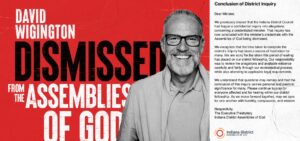
Then came the apology letter. And here’s where the timeline becomes almost comical. The former Pray’s Mill elders emailed their letter to FBC Lindale at approximately 9:07 a.m. Eastern.
At 9:08 a.m. Eastern, they posted it publicly to X.
Apparently Lindale was supposed to use those sixty seconds to “carefully consider” their words. That isn’t a reconciliation process. It isn’t an attempt to hear the men you’ve wronged. It isn’t even enough time for someone to notice the email arrived.
The recipients of the apology were effectively being used as the addressees of a public statement.
That matters because thousands of Christians then encountered the letter with none of this context. They saw a public confession addressed to FBC Lindale and understandably thought: Good. They’re finally dealing with this. Praise God.
Christians are conditioned (rightly) to hope for repentance, reconciliation, and restoration. We want to believe someone who publicly confesses wrongdoing is genuinely attempting to make things right. That charity should not be exploited, yet that’s exactly what has been done. The men who had reportedly put Lindale off for weeks gave Lindale one minute with their “apology” before broadcasting it to the world.
And the apology itself conveniently described their wrongdoing as “meddling” in a disciplinary process that their own covert actions were designed to create.
What They Still Haven’t Confessed
The statement left the bulk of their sin and the resulting circumstances untouched. There is no admission that Pray’s Mill deacons asked for the elders’ resignations. There is no admission that the church determined they had failed in four elder qualifications. There is no comparable disciplinary process of the sort these men themselves demanded in the Josh Buice affair.
And most importantly for the Buck matter, there is still no confession of the actual motive that caused ordained pastors to decide that secretly assembling and distributing accusations was preferable to contacting another church openly.
That last question is now more pressing than ever. Because their stated justification has been obliterated by their own sermon archive.
If commentary dependence really was the grave threat to Christian integrity that justified compiling this packet against Buck, how did three of the men involved somehow fail to notice the same conduct in their own preaching? If it wasn’t, what were they actually trying to accomplish?
Resignation Isn’t Repentance
There has been a strange tendency among some observers to treat resignation as though it settles the moral question. They resigned. They apologized for something. What more do you people want? The truth would be nice.
Repentance requires confession of the thing actually done. You don’t get to choose the least damaging description of your conduct, confess to that, and then invoke Christian charity against anyone who notices that the central wrongdoing remains unaddressed.
The Pray’s Mill elders did not merely “meddle.” They deliberately concealed their identities while attempting to persuade another church that their pastor was guilty of serious moral misconduct.
They did so using a standard that their own preaching does not survive.
And after the men they wronged repeatedly sought a private meeting, they eventually sent them a carefully worded public apology and gave them approximately sixty seconds before publishing it to the internet.
That is why these men must not be congratulated for their supposed repentance, nor forgiven at this stage. Forgiveness presupposes that we’re talking truthfully about what requires forgiveness. And the central question still hasn’t been answered. So we’ll ask it again: Now that your implied motive for your sordid scheme against another pastor and his church is clearly false, what was your real motive?
Investigation Documents:















8 responses to “Walking Off the Plank in Their Own Eyes: The Dossier Comes for Aniol, Sikes, and Joyner”
Do you seriously not have anything else to do with your life?
Anonymous huh? That figures.
Someone loved G3.
Good work as usual, David
They should have been fired. But the big question is why do they have it in for Tom Buck? What is the motive? Is this settling long held grudge?
“With the measure you use, it will be measured to you.” (Matthew 7:2). Herein is the application of the lesson.
Good example of why we should avoid giving much weight to the commandments of men and stick with the commandments of God. Because the commandments of men are inherently incomplete, imperfect, baseless and lacking, and will most often lead to hypocrisy. It is a tell-tale sign, and one thing we look for when testing the spirits. Jesus said to beware the leaven of the Pharisees which is hypocrisy (Luke 12). If we appeal to the commandments of men, we’ll inevitably corner ourselves. But not so with the commandments of God.
[…] Baptist Pastor CONDEMNS King Josiah For Destroying Idols and Asherah PolesSkillet Drops Opening Act From Tour After Singer’s ‘OnlyFans’ Page DiscoveredWalking Off the Plank in Their Own Eyes: The Dossier Comes for Aniol, Sikes, and Joyner […]