

By Nathaniel Hillmer
Editorial Note: The names of missionary families and their countries of service have been changed, and certain identifying details have been altered or obscured to protect their ongoing missionary efforts. When countries are substituted, a country of comparable context is used to communicate the significance of their calling.
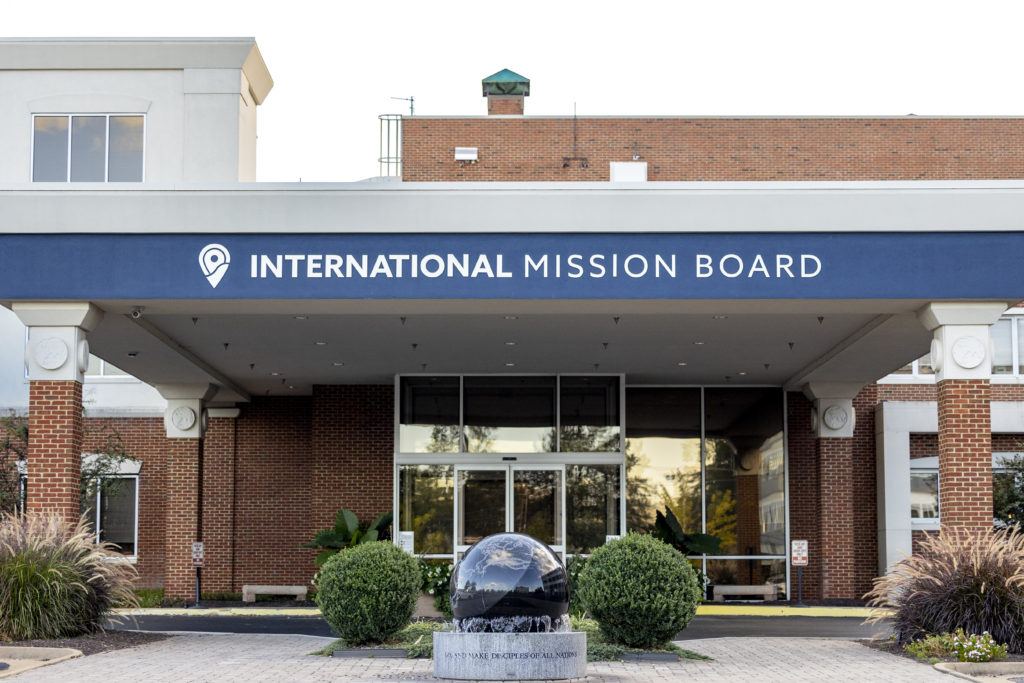
James and Rachel Collins love serving the Lord and Southern Baptist churches through their work for the International Missions Board. They are Field Personnel — the technical term for IMB Missionaries — and it has been their dream job. Every day, they wake up thankful for the opportunity to spread the gospel to the people of a closed Muslim country. They’ve been working toward this goal for over a decade: Proclaiming Jesus’ death, burial, and resurrection to the nations.

There is one obstacle standing between the Collins family and the people of that country — and it has nothing to do with visas, language, or security.
Their daughter, Emma, was born less than a year ago. Due to concerns about adverse reactions to vaccines, the Collins’ were hesitant to vaccinate Emma in compliance with the former CDC guidelines, which were lowered in January 2026.
Under the schedule the IMB still mandates, children receive 32 doses across 11 vaccine series — protecting against 18 diseases — by age 18. In their policy, the IMB now makes exceptions for the COVID-19 vaccine and HPV vaccines.
Because the Collins family could not, in good conscience, comply with the IMB’s vaccine requirements for their daughter, they have been unable to receive medical clearance to continue serving with the IMB.
The Collins family is not the first to face this pressure.
Immediately following the COVID-19 vaccine’s manufacturing, the IMB mandated that all Field Personnel receive the vaccination. The press release stated, “The IMB policy requires IMB missionaries to be vaccinated against COVID-19 prior to attending Field Personnel Orientation prior to their long-term field service…”
This policy was overturned 9 months later in June 2022, once vaccine mandates were lifted in various countries.
In other words, this is not a new issue at the IMB, making it especially worthy of Southern Baptists’ attention.
What are their intentions?
The IMB’s Vaccine Rationale
Upon request, IMB President Paul Chitwood provided the entity’s rationale for the current policy.
The document highlights four primary reasons for requiring vaccines:
- To protect the health of workers facing unique environments and disease exposure
- To prevent long-term health problems that affect quality of life and work capacity
- To reduce costly medical treatment that diverts financial resources from addressing the issue of lostness
- To protect vulnerable populations — including colleagues, national partners, and the lost — from preventable disease introduction
In conversations with Chitwood, he emphasizes the Core Missionary Task, which is, in short, to make disciples of all nations. He believes this policy is one practical way to help carry out this task and take the gospel to the nations.
Is that actually what’s happening, though?
Ironically, the policy is, in some ways, promoting the exact opposite — it is causing the IMB to take Field Personnel off the field, thereby shrinking the international reach of Southern Baptist churches.
Against Neutrality is reader-supported. Become a free or paid subscriber to support work committed to moral clarity for a disordered age.Subscribe
The Policy in Practice
James and Rachel Collins did not want to stop serving with the IMB — they wanted to continue to carry out the Core Missionary Task. But they were required to stop as a consequence of noncompliance with the IMB’s policy.
The IMB’s rationale is not unreasonable on its face. Missionaries serve in high-risk environments. Preventable illness costs money and pulls personnel off the field. The institution has a legitimate interest in the health of those it sends. If the policy worked the way it’s described on paper — carefully tailored, evidence-informed, respectful of individual circumstances — there would be little to contest.
But the Collins family did not experience the policy the way the white paper describes it.
James and Rachel are not anti-vaccine. They are not ideologues. They are career missionaries who have spent years pursuing the Core Missionary Task in one of the most dangerous mission contexts on earth. When their daughter Emma was born, they did what conscientious parents do: they consulted their physician, weighed the risks of their specific context, and made considered decisions about her care. What they did not expect was that those decisions would be made for them.
The family continually experienced persistent ambiguity in what the institution actually required.
When James sought clarification on what “core vaccines” actually required, he received different answers at different times from different people within the IMB’s medical and HR structure. At various points, he was told that core vaccines depended on the host country. Then the delayed schedules might be accommodated. Then, that core vaccines meant the CDC schedule.
This ambiguity was not merely frustrating. It was revealing. An institution confident in the scientific basis of its policy does not need to change the authority it cites when one authority becomes inconvenient. The policy stayed fixed, but the justification moved.
The second problem was the catch-up schedule. Emma had not received vaccinations on the standard timeline. James and Rachel were still weighing their options, which were made more difficult by what they had already witnessed the IMB do with the COVID vaccine. Just as with any parent, their primary concern was for Emma’s well-being, and their parental rights were being stripped from them.
To achieve medical clearance, the IMB required Emma to catch up on her vaccines — approximately fourteen doses across an eight-week window.
The IMB’s medical staff acknowledged this was technically within the CDC’s catch-up schedule guidelines. What no one addressed was that the catch-up schedule is a ceiling, not a prescription, and that no cumulative safety data exists for administering that volume of vaccines in such a compressed timeframe to an infant. James noted this explicitly: the schedule permits it, but the science does not evaluate it. The IMB applied the technical permission as a hard requirement.
It is worth noting that the Collins family’s country of service does not itself require these vaccinations for entry. The mandate is entirely the IMB’s own. A missionary serving in Western Europe faces the same vaccine requirements as one serving in a high-risk context in the developing world. The schedule is global, uniform, and non-negotiable regardless of actual disease exposure.
James asked a straightforward question: could the timing and selection of Emma’s vaccines remain a decision made by her parents, in consultation with their physician? The answer was no.
That answer deserves to be named plainly.
The IMB’s own Vaccine Rationale document states: “The Company respects individual and parental rights, including the choice not to receive a vaccine for themselves or their children.” FAQ question ten asks whether vaccine requirements are meant to restrict autonomy, and the answer given is: “No.” Yet when a parent asked to exercise that autonomy in consultation with a licensed physician, the institution said it was not possible.
James described every interaction with IMB staff on this question in the same terms: “It was perpetually about policy. This is the policy. You’re either with it or you’re not.” There was no substantive conversation about the vaccines themselves — about the specific risks of their assignment, about Emma’s individual health profile, or about the judgment of her physician. Only about compliance.
David and Sarah Mitchell have had a similar experience. They are Team Associates with their first child on the way. They want to serve. They are, by every measure the IMB uses, qualified to go. “We would go with the IMB tomorrow if the policy were reversed,” David said. “This is the only thing holding us back.”
The Collins family and the Mitchell family are not outliers. Multiple families known to this reporter have been either removed from the field or blocked from reaching it over this policy. In each case, the institution’s response has been the same: the policy is the policy.
What makes that posture particularly difficult to accept is that the Collins family had already watched the IMB declare a vaccine policy immovable — and then move it. That history is not ancient. It is recent. And it is documented.
The Baptist Problem
The IMB’s vaccine policy is not merely a medical question. It is a Baptist one.
Southern Baptists do not affirm an ecclesiastical authority; we seek not to bind consciences with authoritative teaching where the scriptures are silent. Rather, we are a confessional people who have agreed together on the essential matters of the faith and have historically maintained that, outside those essentials, the conscience of the individual believer answers to God alone.
That conviction is not peripheral to Baptist identity. It is inscribed in our confession.
The Baptist Faith and Message 2000, Article XVII, states plainly: “God alone is Lord of the conscience, and He has left it free from the doctrines and commandments of men which are contrary to His Word or not contained in it.”
Every IMB missionary affirms this document. Every IMB trustee is elected by messengers from churches that affirm this document. The IMB itself lists alignment with the Baptist Faith and Message as a basic condition of service. The confession is not decorative — it is the doctrinal foundation on which the entire cooperative enterprise rests.
And that confession says that where Scripture does not speak, the conscience is free.
Vaccine scheduling is not addressed in Scripture. The timing, spacing, and selection of childhood immunizations are not a matter of biblical command, confessional doctrine, or moral theology. It is a medical judgment call — one on which sincere, informed, God-fearing Christians disagree. The IMB’s own Vaccine Rationale document implicitly acknowledges this by spending the bulk of its argument on medical and financial grounds rather than theological ones. The institution does not claim Scripture requires vaccination. It claims that godly stewardship does.
That distinction matters enormously. Stewardship arguments are prudential arguments. They can be weighed, contested, and revised in light of new evidence — as the IMB itself demonstrated when it reversed the COVID vaccine mandate in June 2022. Prudential judgments are precisely the kind of judgments Baptist ecclesiology reserves to the individual conscience.
When an institution elevates a prudential medical judgment to a non-negotiable condition of service — when it tells a missionary father that the decision of when and with what to vaccinate his daughter is not his to make — it has crossed from institutional policy into conscience-binding. And conscience-binding, according to Southern Baptists’ shared statement of faith, belongs to God alone.
The IMB appears to sense the tension. Its own Vaccine Rationale document includes this sentence: “The Company respects individual and parental rights, including the choice not to receive a vaccine for themselves or their children.” FAQ question ten asks directly whether vaccine requirements are meant to restrict autonomy and answers: “No.” The institution says the right things, but its policy does something else.
James Collins described this contradiction with precision: “The Company would totally affirm your individual conscience before the Lord. But at the end of the day, this is its policy. And the policy doesn’t reflect that value.”
That is not a disgruntled employee venting frustration. That is a Southern Baptist missionary — one who loves the IMB, wants to continue serving with the IMB, and has spent years engaging in the Core Missionary Task — identifying a gap between what the institution professes and what it practices. Southern Baptists should take that observation seriously.
The At-Will Argument
The IMB’s Vaccine Rationale anticipates this objection and offers a preemptive answer. The document states: “All service with the Company is inherently voluntary and at-will.”
The implication is clear: No one is forced to serve with the IMB, and those who object to the vaccine policy are free to serve elsewhere. The institution is simply setting the terms of employment, as any employer may do.
While this argument is legally accurate, it is ecclesiologically irrelevant.
The IMB is not a private corporation. It is not a parachurch organization with its own independent donor base and self-defined mission. It is the international missions arm of the Southern Baptist Convention — established by Southern Baptist churches in 1845, funded by Southern Baptist giving through the Cooperative Program and the Lottie Moon Christmas Offering, and governed by trustees elected by messengers from those same churches. The IMB exists because Southern Baptists created it to carry out their shared Great Commission calling. Its authority derives from the convention, and its funding from the pews.
When the IMB tells a Southern Baptist missionary “comply or don’t serve,” it is not a private employer exercising a neutral prerogative. It is a convention entity making a determination about whose conscience may participate in the convention’s own missionary task. That is not an HR decision. It is an ecclesiological one — and it belongs to Southern Baptists collectively, not to a medical department operating behind a corporate veil.
The at-will framing is designed to close the conversation. But Southern Baptists are not employees of the IMB. The IMB is their institution — it exists to enable Southern Baptists to carry out the Great Commission.
When it adopts a posture that functionally binds the consciences of those it exists to serve, it contradicts the Baptist Faith and Message it requires missionaries to affirm and operates more like a private corporation than a convention entity accountable to the people in its pews.
An Institutional Pattern
In September 2021, the IMB mandated that all Field Personnel receive the COVID-19 vaccine prior to attending Field Personnel Orientation — a requirement without which missionaries cannot reach their country of service. The announcement framed the decision in terms Southern Baptists would hear again: missionary access, disease exposure, and stewardship of organizational resources. Personnel who pushed back were told the policy would not change.
Nine months later, in June 2022, it changed.
The IMB’s official explanation was that country entry requirements had eased and global access had improved. What the announcement did not say — and what Southern Baptists deserve to notice — is that the conscience concerns missionaries had raised throughout played no acknowledged role in the reversal. The institution did not say it had reconsidered the liberty of conscience question. It said the logistical circumstances had changed.
The policy had been called immovable. Then it moved. The stated reason was external. The conscience of the missionary was never part of the calculus.
That same pattern appears in the IMB’s response to the CDC’s January 2026 vaccine schedule update.
When the CDC reduced its universal childhood vaccine recommendations from eighteen diseases to eleven, the IMB reviewed the change and determined it did not affect their requirements. Their reasoning: CDC guidelines distinguish between standard and high-risk populations, and IMB personnel — regardless of their actual country of service — are classified as high risk across the board. A missionary serving in Western Europe faces the same requirements as one serving in a region with endemic disease. The classification does not flex. The mandate does not either.
Read together, the COVID reversal and the IMB’s response to the CDC schedule change tell the same story: the IMB follows whichever external authority produces the outcome it has already decided upon. The policy is not fixed to a principle, but to a result. And the result, in every iteration, is the same — maximum vaccine compliance, with conscience nowhere in the equation.
At the 2026 SBC Annual Meeting in Orlando, Chitwood disclosed that the policy had recently undergone an outside review. Responding to a messenger’s question from the floor, he stated that credentialed medical personnel had examined it the prior year and, after extensive study, affirmed the policy and its requirements with a single change — moving the HPV vaccine from required to optional. That made HPV the second standing exception to the mandate, alongside the COVID-19 vaccine, which the IMB had already set aside in 2022. And HPV is an adolescent vaccine — the concession does not reach the infant immunization schedule at the heart of the Collins family’s case.
Read against everything above, the disclosure is clarifying rather than reassuring. The review was a medical review. It evaluated the medical and financial rationale and affirmed it. The one question at the center of this article — whether a convention entity may bind the conscience of a missionary father in a matter on which Scripture is silent — was never within its scope.
The IMB did not reconsider its posture toward liberty of conscience. It re-validated the prudential case it had already made, through the same kind of authority it has always cited, and arrived at the same result.
This is why the completed review settles nothing for Southern Baptists. The COVID mandate did not change because the institution reconsidered missionary conscience; it changed when country entry requirements made it untenable. A medical review that affirms a medical rationale works the same way — it answers the question the institution was willing to ask and leaves untouched the one it was not. An outside review conducted on those terms is not true accountability to the convention. It is the appearance of it.
A Disqualifying Condition
There is one further dimension of the IMB’s medical policy architecture that Southern Baptists should understand — and it compounds everything that precedes it.
The IMB’s publicly available Team Member Qualifications and Preclusions document lists the medical conditions that disqualify missionaries and their family members from field service. The document is not hidden. It is hosted on imb.org and available to anyone who looks for it. Among the disqualifying conditions for missionary children is this: autism spectrum disorder.
A child diagnosed with autism spectrum disorder is grounds for a missionary family’s removal from the field.
That fact belongs alongside the vaccine mandate for a specific reason. The IMB requires missionary families to vaccinate their children on a schedule the institution sets and enforces. The institution bears no vocational risk if a child experiences an adverse outcome. The family bears all of it. And among the adverse outcomes that carry the most sustained public concern in connection with the childhood vaccine schedule — whatever one believes about the underlying science — is autism spectrum disorder.
The IMB mandates the schedule. The IMB disqualifies families whose children are diagnosed with autism. The institution that issues the requirement also enforces the consequence. The missionary family has no recourse in either direction.
If a child develops autism — for whatever reason, from whatever cause — the family loses their career. The institution that required the vaccine bears none of that risk.
The IMB’s Vaccine Rationale document argues that the mandate is an act of stewardship — protecting the financial resources entrusted to the organization by Southern Baptist donors. It is worth asking whose stewardship is being protected. The institution’s exposure is limited, while the missionary family’s is not.
A Call to Reform
James Collins loves the IMB. He said so plainly, and there is no reason to doubt him. He does not want to burn down the institution. He wants to continue serving with the IMB. He wants to preach the gospel to people who have never heard it, on a team he loves, through the organization Southern Baptists built to make that possible.
The policy is the only thing standing between him and that calling. Many would-be IMB missionaries, like the Mitchell family, are in the same predicament.
Southern Baptist trustees have the authority to change that. The IMB’s vaccine requirements are not inscribed in Scripture. They are not confessional commitments. They are institutional policies — trustee-approved, trustee-revisable. The same board that approved this policy can reform it. That is not a radical proposition. It is the ordinary function of institutional accountability in a Baptist context.
Reform does not need to look complicated. The Collins family did not ask to abolish the vaccine program. The Mitchell family did not ask the IMB to abandon its concern for missionary health. What they asked — what every family in this situation has asked — is that the timing and selection of their children’s vaccines remain a decision made by parents, in consultation with their own physician. They welcomed guidance from IMB Medical. What they could not accept was the removal of parental judgment from the process entirely.
That is a reasonable ask. It is a Baptist ask. And it deserves a Baptist answer.
Chitwood has now told the convention that the outside review is finished and that it affirmed the policy. That is not the end of the matter; it is the reason the matter belongs to the messengers. A medical review can only answer a medical question, and the question Southern Baptists must answer is not medical. It is confessional.
At this year’s meeting, two messengers — Michael Schneider and John Jones, both of Missouri — filed motions asking the IMB to revisit its vaccine requirements and accommodate missionaries who decline on grounds of conscience, and both were referred to the IMB. The question is now formally before the trustees. What remains to be seen is whether they will treat it as the conscience question it is — or run it back through a medical review and return, predictably, to the same result.
The SBC’s annual meeting is an appropriate venue for this conversation. Messengers from Southern Baptist churches — the same churches that commission these missionaries, pray for them, and fund their work through the Cooperative Program and the Lottie Moon Christmas Offering — have both the standing and the responsibility to ask whether one of their entities is operating in a manner consistent with their convictions. If trustees will not respect the liberty of conscience, the messengers should press them to.
The IMB exists to address what its own document calls the world’s greatest problem: lostness. Every missionary family removed from the field over this policy is a family that is no longer addressing that problem. Every qualified candidate turned away is a gospel conversation that does not happen. Every church that commissions a missionary only to watch them sidelined by a vaccine mandate is a church whose generosity is being frustrated by an institutional policy that Southern Baptists never explicitly chose and may never have approved if they had understood its implications.
The IMB was built to send Southern Baptists to the nations. It should not be in the business of sending qualified missionaries home.
This article was originally published by Nathaniel Hillmer on his Substack, and reprinted in full with permission, with some light editing, and the addition of the video from the recent 2026 SBC convention.





















One response to “Sent Home: How the IMB’s Vaccine Policy is Forcing Missionaries Off the Field”
So a ‘religious organization’ offers no ‘religious exemption’. How ironic.
Excellent article. Yet another reason I’m glad I left the God-forsaken SBC (I suppose the membership may not be forsaken but the leadership most definitely is)