

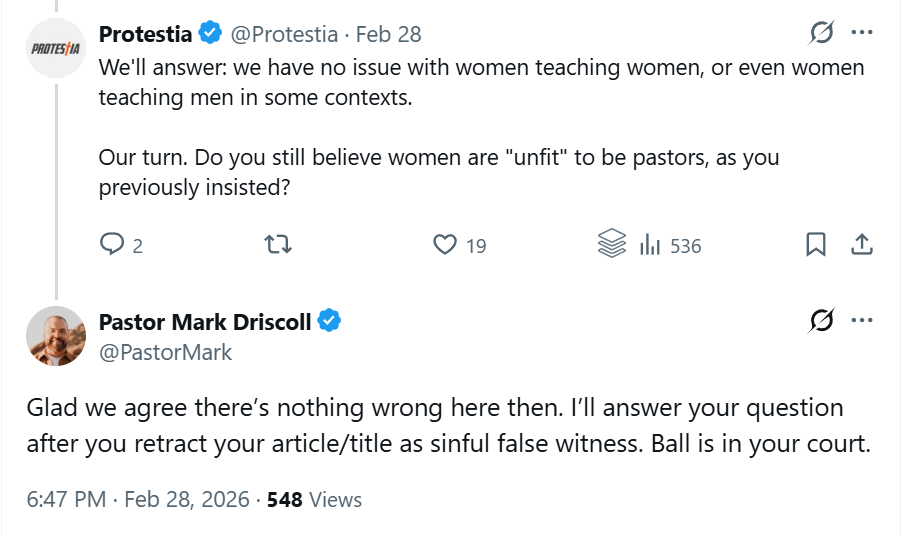
Two days ago, disgraced “pastor” and famed church discipline runaway Mark Driscoll used his “pulpit” to accuse Protestia of violating the Ninth Commandment, alleging that our reporting bore false witness against him. The charge stemmed from our February 27 article documenting that Trinity Church platformed a woman pastor who preached at a church event (“Mark Driscoll Has Woman Pastor Preach At His Church, Promotes Her Message“) — a headline Driscoll insists was misleading because the sermon occurred at a women’s gathering rather than a mixed congregation.
Driscoll’s run at us:
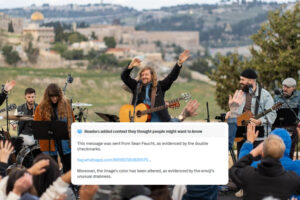
My reminder remix:
True to form, Driscoll’s lies abounded in his “lying is basically heart murder” sermon.
Accusing others of breaking the Ninth Commandment is not a rhetorical flourish. It is a claim of moral sin before God. Such an accusation would demand careful precision for an actual Christian. Bound by no such requirements, Driscoll rebutted an argument we did not make while conveniently avoiding the one we actually raised.
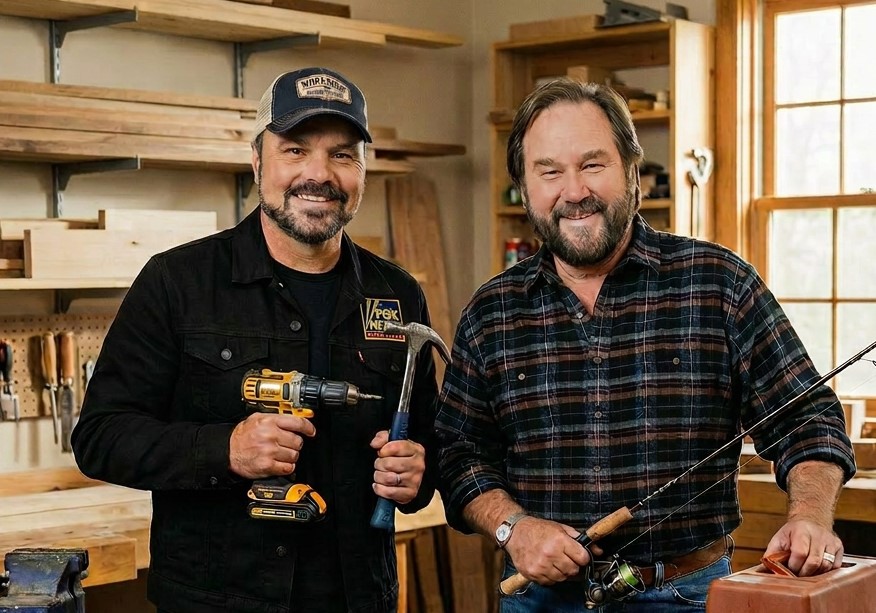
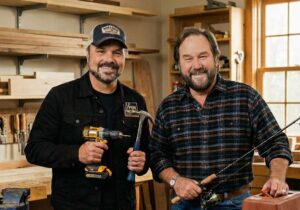
Our objection was never about who happened to be sitting in the room that day. Millicent Sedra could have been sermonizing potted plants for all it mattered. The issue is that Driscoll, reinvented as Tim the Toolman Pastor™ for a church planted squarely in the land of affluent Fox News boomers, brought in a woman “pastor” who prances around with the biblical title and regularly teaches men with authority. God’s Word reserves the title and function for qualified men (1 Tim. 2:12; 1 Tim. 3:1–7; Titus 1:5–9), thus showing Driscoll to still be the clownish attention whore he’s always been rather than the “we believe all of the Bible” man’s man he’s tried to morph into.
By shifting the debate from doctrines (which Driscoll collects and trades like Pokémon cards) to headline technicality (which works well in fooling the same people who think blogs have free passes against defamation), Driscoll figured he could (again) distract from his documented, persistent, and self-aggrandizing disobedience with tried-and-true Orange Website Bad! claims that seemed effective in prior decades.
In the same sermon, Driscoll laughably claimed he doesn’t “do interneting,” yet the revelation that he had a woman “pastor” at his church was apparently enough to get him “internetting” all over the place (10-12 posts/replies about just this issue), and demanding retraction before he would answer basic questions (a typical ploy by self-serving and self-appointed narcissistic “pastors”).
Of course, such self-serving childishness is nothing new for Driscoll.
A Ministry Defined by Charlantry
Across three decades, Mark Driscoll’s public theology has repeatedly changed in response to the whims of the audiences sustaining his platform.
In early Mars Hill Seattle, Driscoll emerged as the hyper-masculine Reformed provocateur, preaching aggressive complementarianism to a church largely composed of young men reacting against soft evangelicalism and emergent church ambiguity (even as Mark himself was aligned with emergent Christianity).
His rhetoric fit the moment perfectly: confrontational, anti-feminist, and culturally insurgent.
As his platform expanded nationally, the tone broadened. Conference circuits, publishing contracts, and evangelical celebrity required a more marketable posture. Controversies during this era were consistently framed as attacks from critics, bloggers, or spiritual enemies rather than substantive disputes.
After the collapse of Mars Hill in 2014, a rehabilitation phase followed. Public language softened. Associations widened. Earlier theological rigidity appeared negotiable in the pursuit of restoration and renewed ministry viability.
Today, in Scottsdale, Arizona, a new persona has emerged — part culture-war commentator, part “based dad” patriarch, complete with trucker hats, political monologues, and cable-news cadence. The shift aligns strikingly well with the demographic realities of Trinity Church’s environment: affluent suburban evangelicals shaped by talk radio, Fox News–style commentary, and a desire for cultural clarity amid perceived social decline.
The constant across these eras has not been doctrinal continuity, but rhetorical intensity paired with pulpit authoritarianism that justifies anything. Over the last twenty years, Driscoll has one of the most scatterbrained ministerial track records we’ve ever seen (hold your breath):
- Beer and Champagne New Year’s Parties at his church
- Preached at Robert Schuller’s Crystal Cathedral
- Promoted the mystical practice known as “Contemplative Prayer”
- Claimed Cessationism before pivoting to “personal revelations from Jesus”
- Claimed God gave him graphic visions of his congregants having sex with their affair partners
- Claimed to personally argue with and “battle” demons
- Promoted Hillsong’s Brian Houston preaching at the church of pastor and pastrix Judah and Chelsea Smith
- Partnered with Steven Furtick
- Rick Warren
- Craig Groeschel
- Bill Hybels
This list is hardly exhaustive, of course. Driscoll has defended Joel Osteen as a true Christian minister. Although to be fair, the newer, digital ecumenical movement does this too, with apologists like Mike Winger previously vouching for Osteen’s salvation, and Ruslan KD thanking “Pastor Mark” after Driscoll promoted him.
The Demographic Gravity of Trinity Church
Churches, like all institutions, exist within feedback systems. Messages that resonate are rewarded with attendance, affirmation, and financial stability. Messages that unsettle core supporters quietly disappear.
Scottsdale’s religious landscape skews older, wealthier, and culturally conservative. Congregations formed within this environment tend to value strong masculine leadership, political certainty, and clear opposition to progressive cultural trends. A pastor speaking in that register feels not political but pastoral to such an audience.
But this environment creates a tension. The audience expects complementarian symbolism — strong rhetoric about biblical gender roles — while simultaneously tolerating practical exceptions that avoid unnecessary controversy or internal disruption.
The result is what might be called complementarianism by asterisk: doctrinal labels maintained rhetorically (we call this being “website orthodox”) while boundaries expand operationally through qualifications, contexts, and exceptions based on personal “I hear from God” authority.
Which brings us back to Trinity Church.
Complementarianism Without Conviction
Historic complementarianism has never been defined by whether a woman teaches men on a particular Tuesday night. It concerns the nature of pastoral office and authority itself.
If a woman is ordained or recognized as a pastor and exercises teaching authority within the church, the complementarian question is already settled, regardless of venue. Audience composition does not redefine ecclesiology. A lady “pastor” does not become obedient the moment they kick all the men out of the sanctuary.
Yet the defense offered in this case relies precisely on contextual narrowing: it was a women’s event, a limited setting, a qualified circumstance. Each explanation functions as an exception designed to preserve Driscoll’s desired manly image while accommodating practices earlier versions of Driscoll (somewhere between his emergent phase and his return to NAR-style visions from God) would have rejected outright.
The more exceptions required to sustain a doctrinal identity, the more that identity begins to function as reputation management rather than conviction.
MacArthur Saw the Problem Fifteen Years Ago
Long before the present Trinity Church controversies, female-pastor debates, or social-media disputes, John MacArthur issued a warning about Mark Driscoll that now reads less like a personality clash and more like an early diagnosis of a recurring ministry pattern.
In 2009, writing in Pulpit Magazine, MacArthur publicly rebuked Driscoll over his sexually explicit preaching from Song of Solomon. The criticism was widely dismissed at the time as generational friction — an older pastor objecting to a younger, culturally aggressive church planter. MacArthur himself rejected that explanation outright. “This is not about style, methodology, or preference,” he wrote, insisting instead that the issue concerned “clear biblical standards for the character and conduct of elders.”
MacArthur’s concern was not merely rhetorical excess but a deeper philosophy of ministry. He argued that attempts to make preaching culturally compelling by adopting worldly forms inevitably undermine pastoral holiness. Scripture, he noted, commands that a pastor’s speech be marked by purity and restraint, warning that “the idea that we must adopt the world’s ways in order to reach the world is an absolute fallacy.”
The problem, in MacArthur’s view, was methodological before it was moral. When effectiveness becomes the governing priority, interpretation itself begins to bend. Cultural relevance starts shaping how Scripture is handled rather than Scripture shaping how ministry is conducted. As he warned at the time, the church does not sanctify culture by imitating it; pastors are called to confront the world with transformed speech and conduct, not mirror it.
MacArthur explained that his public rebuke came only after private attempts at correction had failed, appealing to Paul’s instruction that elders who persist in error must be addressed openly for the protection of the church. The concern was influence: younger pastors were imitating what they saw, and what they saw, he believed, blurred the line between faithfulness and pragmatism.
Seen in hindsight, MacArthur’s critique reads less like a dispute over one sermon series and more like a warning about trajectory. The danger he identified was a ministry increasingly shaped by audience connection and cultural effectiveness — a dynamic that, if left unchecked, would not produce a single doctrinal rupture but a series of gradual adjustments, each defended as contextual necessity.
Fifteen years later, the controversy surrounding Trinity Church looks strikingly familiar. The subject matter has changed, but the underlying concern MacArthur articulated remains recognizable: when ministry strategy adapts itself to audience expectations, theological boundaries rarely remain fixed. They expand slowly, defended at each stage as reasonable clarification rather than acknowledged change. Of course, the difference is that Driscoll has learned the church discipline lesson and isn’t bothering with the pesky mutual accountability that held him accountable at Mars Hill.
And despite his silly claim that he “doesn’t do internetting,” the reason that Driscoll tried to drag us to his “congregation” (and later via “internetting”) is that the hypocrisy we exposed shatters the phony image of the faithful, conservative, everyman pastor Driscoll is trying so hard to establish. He remains an unrepentant, disqualified, fake pastor, no matter how many people he fools. Younger Christians are on to his scam. It’s only a matter of time until the Fox News boomers get wise to it, too.















9 responses to “Fox News Driscoll”
This is similar to my contentions with those who said it is sinful to not vote. The danger is that doctrine can be shifted downstream of politics, which is entirely backwards from how it should be, and it is also backwards in terms of long term reality, because in the long run politics and law will be downstream of doctrine – of basic morals and ethics that underpin it all.
This is why and how he and others justify his misdirected response. Because they’re certainly correct about the dangers of feminism, but they deem the ends to justify the means. The ultimate objective and goal becomes muddied, the straight and narrow becomes less clear, reasoning becomes more relativist, and focus turns to the here and now, which ultimately draws people away from the Gospel of Jesus Christ. This is why Driscoll is inconsistent, all over the place. Because he’s not aimed at the right target. His mark is something other than that of the high calling of God in Christ Jesus (Phil. 3)
He knows full well that leadership in the church is a job for men and only men, specific men who are called and meet the qualifications (1 Tim. 3, Titus 1, etc.). And he knows full well that he is deceitfully dodging.
We have to humble ourselves before the Lord, realizing that we do not know what He knows. That’s the same problem mankind has had ever since Adam sinned. Disbelief, calling God a liar, believing we know better than He does, thinking that we can stray from doing things His way, convincing ourselves that good can result from sin and disobedience, or even as extreme as many nowadays who have determined in their hearts that sin is good.
That “website orthodox” was defined long ago, before there ever was an internet …
“8 “‘This people honors me with their lips, but their heart is far from me;
9 in vain do they worship me, teaching as doctrines the commandments of men.’”” (Matt 15:8-9, etc.)
Many say Lord, Lord, but they are in reality workers of iniquity. (Matt. 7:21-23)
Many have a form of Godliness, but deny the power thereof. (2 Tim. 3:1-5)
Just today we find out that the transvestite mutilation of children, an abomination to the Lord, is in the Save America Act. They’ve also affirmed and endorsed other abominations, including the perversion of marriage.
I can tell them all right now, God will not bless such wickedness. They’re not saving America. They’re ensuring its destruction. And in many ways, Republicans are worse, because they do these things, promoting such wickedness, while also claiming the name of Jesus. Dragging His name through the mud. In that sense, republicans are far worse. At least democrats are honest about hating the Lord.
Just as sure as the sun will rise, defying Almighty God is no way to save a country. It will only certainly ensure a country’s destruction. You can be assured of that fact.
I’m certainly glad democrats lost. They’re unquestionably worse. But I’m frankly also at peace, with clear conscience, knowing I did not vote, and did not endorse or consent to such wickedness. And I’m not going to listen to anyone who tries to claim it was sinful to not vote. As they say: both parties are on the highway straight to the pit of hell. The difference is that republicans drive slower.
Turns out apparently it was an error …
https://notthebee.com/article/can-you-spot-the-major-error-trump-made-here-trump-sure-spotted-it-real-fast
Scripture teaches far more about the heart and mind than any endeavor of mankind ever could. One most basic is, in so many words, that our priorities will order themselves according to our concern. It cannot be helped. It cannot be avoided. We cannot say we’re concerned most about one thing, but have another at highest priority. We’re far too weak, corrupted from the fall of creation, to be able to do any such thing.
Though we may be right about a specific issue at a given time, if our priorities are necessarily backwards, because our concerns are backwards, then we will be headed in the wrong direction. If that’s the case, then we’re not on the straight and narrow, but rather are at a temporary intersection, happening to cross it for a moment. We might be at the right point at a given time, right about a given issue at a given time, but wrong concerns and wrong priorities will still set us on the wrong vector.
What’s most important to understand, which is the Gospel of Jesus Christ, is that it is only by the power and work of the Holy Spirit, only by being truly born again, that our deepest concerns can become truly aligned with what our priorities should be. Only He can set our vector along the same line as the straight and narrow, such that we’re on it all the time. And it cannot be faked. Disordered concerns cannot remain hidden for long.
A man cannot serve two masters …
[…] Fox News DriscollBethel Church Shuts Down 5500-Member Alumni FB Page, Sparking BacklashEpiscopal Church Holding Ramadan Dinner to ‘celebrate the sacred moment of fast breaking’‘Oh yeah, you like that?’ Megachurch Pastor Brian Tome Suspended Over ‘Crotch Whipping’ AllegationsWoke Pastor Of America’s Largest United Methodist Church Exploring Run For U.S. Senate […]
Interesting you use an unbiblical pastor to go after another pastor. MacArthur told us that Jesus’ blood meant nothing, “Not the bleeding but the dying.” But the Bible clearly says, “without the shedding of blood, there is no remission of sins”. Even his clarification was poor.
Goodness gracious you people are insufferable, you mad that John made fun of your “tongue speaking”, or maybe you’re a Papist who thinks doing things will save you. Either way MacArthur had the Gospel right. You’re probably out of context.
I believe his point was that the “shedding of blood” refers to death. That is, a papercut doesn’t suffice. In context, understand the daily burnt offering under the law, which Jesus fulfilled and perfectly superseded, can be translated or understood as a “whole offering”. I.e., burnt until nothing was left. The concept is total and full sacrifice. And Jesus sacrifice was total and full, even though He was buried and not cremated.
I haven’t listened to the particular sermon in question, though I do see that he said “the shedding of blood has nothing to do with bleeding”. And on that point he is correct. That expounds on the significance of shedding of blood and what it truly means. To point out the significance, not to call it insignificant.
Granted he could’ve worded it better, and I could be wrong (as could’ve MacArthur), but I believe you might be falsely accusing him, and should give the matter more thought, in context with the whole of scripture, particularly the concept of whole and total sacrifice.
[…] fled Seattle in disgrace following the implosion of Mars Hill and quickly set up a new church in Scottsdale, Arizona, in […]