

Over the last couple of months, we’ve been unfortunate witnesses to Christian actor Kirk Cameron’s public, epistemological and theological deconstruction, made most evident by his subversive promotion of the heresy known as annihilationism – sometimes called conditional immortality. As this sentence has made several serious charges (deconstruction, subversion, heresy), I will not leave readers without a thorough, evidence-based demonstration of these charges, nor a straightforward explanation of both where Kirk has erred theologically and by what well-worn path he was led away from biblical truth.
While Kirk Cameron’s public ministry has been all over the map (evangelizing with solid brothers like Ray Comfort, then appearing alongside TBN heretics), his embrace of annihilationism is the first time he has publicly advocated for a heretical doctrine held primarily by cults like the Seventh Day Adventists and the Jehovah’s Witnesses, and aligned with Mormon ontology.
While annihilationism has been described (if not labeled) as functional or formal heresy by John MacArthur, D.A. Carson, J.I. Packer, R.C. Sproul, Al Mohler – not to mention its necessary suppositions being explicitly rejected by Augustine, Athanasius, Tertullian, Aquinas, Luther, Calvin, Edwards, Turretin, and Hodge among others – this article is not a full biblical case for or against annihilationism. That work belongs to careful exegesis and sustained theological argumentation and will be addressed separately.

This article instead examines how annihilationism was handled (or, quite frankly, mishandled) in The Kirk Cameron Show, Episode 102: “Hellgate: The Christian Debate We’re Afraid to Have.”
Cameron’s program, whether intentionally or not, functioned as a platform-normalization exercise, where (as I’ll argue) he attempts to ease his unsteady conscience with a veneer of academic stature. By his own admission, his emotional and pastoral distress over the idea that loved ones might spend eternity in hell’s torment led him to consider teachings he had never heard before in his decades walking with Christ.
While Cameron repeatedly restated that Christians are not to form beliefs from emotion, he admittedly followed the same emotional and relational trajectory of annihilationism employed by his new teacher, late Church of Christ lawyer and layman Edward Fudge. Cameron then, under the guise of a roundtable debate, invited Fudge disciple Chris Date and three other relationally-driven apologists to join him in procedurally granting the historically heretical doctrine of annihilationism credibility and parity through the Trojan Horse of balance, civility, and unity.
The result – admitted by Cameron and his son – was not doctrinal clarity, but continued confusion about a doctrine the church hasn’t meaningfully questioned in 2000 years.
A Debate That Was Never Allowed to Ask the Boundary Question
At no point during the nearly three-hour discussion was annihilationism evaluated as potentially false doctrine. Instead, the entire premise of the “debate” was that no participant would be ridiculous enough (Cameron’s buddy, apologist Wes Huff’s label) to suggest that annihilationism is out of bounds for Christian orthodoxy (you know, heresy).
From the opening moments, the conversation was framed as an internal disagreement among faithful Christians. It was repeatedly described as a secondary issue and as a matter of differing interpretations rather than competing truth claims.
Representative statements included:
“This is going to raise more questions, and that’s a good thing.”
(Opening remarks)
“We all share the same creeds and the essential beliefs of Christianity.”
(Dan Paterson, approx. 15:13)
“These are views within the pale of orthodoxy.”
(Chris Date, approx. 25:07)
By assuming legitimacy before examining the doctrine itself, the discussion avoided its most basic theological question: Is annihilationism true, or is it error? A conversation that cannot ask that question cannot resolve it, and Cameron’s (and the other participants’) interest in solving the question was thoroughly and transparently eclipsed by the real interest, which was elevating the viability of a fringe and aberrant false doctrine. The clear “winner” of the engagement was Chris Date, who found himself pulled from the fringes of YouTube theology and in front of an exponentially larger and more “legitimate” audience.
The Voices That Were Absent
The program was presented as a balanced exchange between two views. In practice, the panel consisted of the following positions:
| Participant | Position |
|---|---|
| Chris Date | Software engineer, explicit annihilationist and conditionalist |
| Paul Copan | Sympathetic to annihilationism and opposed to heresy language |
| Dan Paterson | Formerly affirmed eternal conscious torment, but moved to annihilationism |
| Gavin Ortlund | Personally affirms eternal conscious torment while insisting disagreement is non-divisive |
Notably absent was any theologian willing to state that annihilationism lies outside the bounds of historic Christian orthodoxy. No participant ever said that the doctrine was false, unbiblical, or required rejection.
Despite the claim by Cameron’s son that they had “flown in…the best from all across the world,” in truth, Cameron merely brought in a group of buddies from the world of micro-apologetics. Date, Copan, and Paterson are friends and collaborators,1 whose cordial disagreements on issues like annihilationism are used as fodder for the “one more event” apologetics circuit.
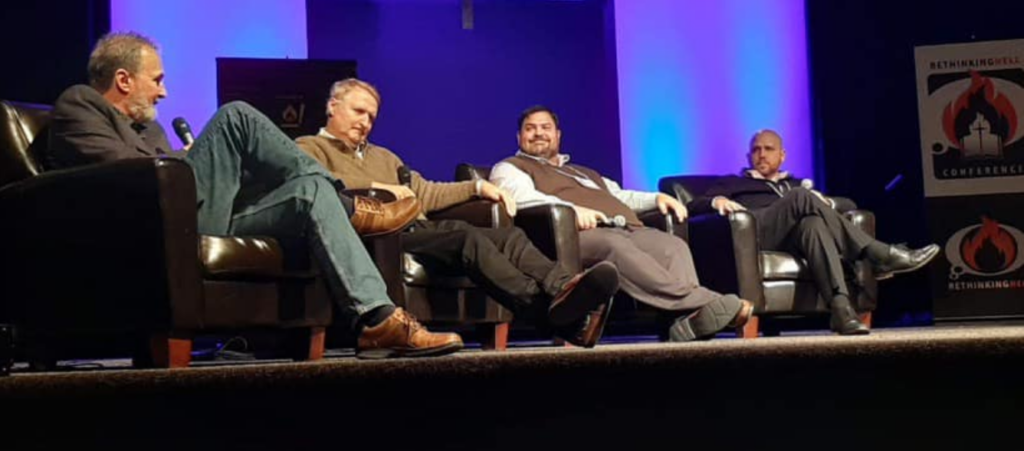
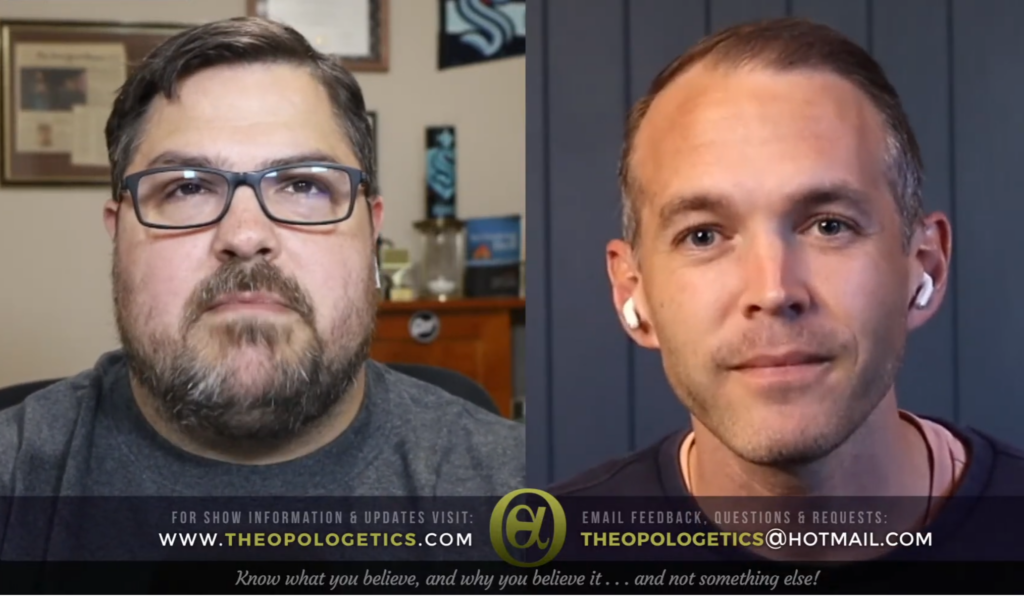
Aside from Date (whose notoriety is based on his rarity as an “I’ll debate anyone” voice for this specific unorthodoxy), the three other participants all come from the world of relational apologetics rather than confessionalism, where theology is approached through (and often, subordinated to) relational and emotional concerns. In other words, a doctrine’s validity is measured as much by its pastoral functionality as it is by its biblical validity. In other words, even plainly true doctrines are subject to functional/rhetorical modification in practice. This standard of discussing truth rather than contending for it is fertile soil for an emotionally comforting doctrine like annihilationism to take root in the hearts of the distressed Christian heart struggling with how to explain hell to their kids.
In “defense” of ECT, Cameron tapped Paul Copan and Gavin Ortlund. Copan is a contextualist philosopher-theologian, adjacent in approach to William Lane Craig or Craig Blomberg within the stream of moderate evangelical scholarship (for example, Copan unironically cited N.T. Wright in the discussion).
Ortlund is known for denying the worldwide Noahic flood, six-day creation, and positing the existence of LGBT and universalist “Christians” (before later correcting himself), along with serving alongside ex-Baptist Russell Moore and Anglican “Side B” priest Sam Allberry. Recently, he went on a tear after Megan Basham’s Shepherds for Sale examined his commitment to modern climate science and his insistence that such a commitment was tantamount to Christian duty.
On the annihilationism/conditionalism side were the aforementioned Chris Date and Dan Paterson, former head of Ravi Zacharias Ministries (RZIM) in Australia prior to the scandalous downfall of Zacharias. Paterson, like other participants, is an apologist focused on cultural engagement, inheriting Zacharias’ experiential and philosophical apologetics methodology, but moving from ECT to annihilationism after leaving RZIM.
Paterson notably argued during the roundtable that God’s sustainment of the existence of hell and those in hell into eternity is God “sustaining evil” (1:33:47) and “enabling sin” (1:34:34) rather than “removing evil from creation” (1:35:31). Of course, scripture nowhere describes hell as ceasing to exist, nor the torment of God’s sinful enemies ceasing (Rev. 20:10).
At 1:34:17, Paterson, as agreed by Date, disagreed with the notion that, if punishment was eternal, God’s wrath against the lost would not be satisfied – directly confirming their heretical notion that God’s wrath against sin can cease apart from the saving work of Christ applied to the sinner. In other words, annihilationists believe that God will eventually remove from Himself a core part of His being, that is, his eternal and holy wrath and vengeance against evil, in direct contradiction to the plain text of Revelation 20:10. According to this formulation, annihilation must be the end for Satan just as much as for lost loved ones.
Ortlund, whose supposed job was to represent the true view of hell, responded to Paterson not by offering correction or pushback, but with multiple errors of his own. These included the purgatoryish notion that judgment “according to their deeds” (Rev. 20:12) indicates proportional torment based on the severity of one’s sin rather than the fact that sinful deeds establish guilt before the throne. Ortlund also argued that “there is a sense in which hell is the absence of God” (1:36:35), contradicting verses like Psalm 139:7–8 and Rev. 14:10, appealing to C.S. Lewis’ “apart from God equals hell” formulation, and reinforcing the annihilationist notion that hell is something other than continuing punishment in the omnipotent presence of God (Rev. 14:10), yet not his relational presence (2 Thess. 1:9).
In other words, the “best of the best” theologian representing ECT wasn’t able to articulate or support the actual position.
Aside from Cameron’s continued framing of amicable conversation as the true marker of Christlikeness (and pointed, Pauline disagreement as un-Christian), the relationship-trumps-truth standard was on comical display throughout the roundtable “debate.”
In fact, across the nearly 30,000 words spoken among Cameron and the four credentialed theologians, there were precisely zero direct verbal disagreements. Statements such as “I disagree,” “I reject,” “you’re wrong,” “that contradicts,” or “that is false” were not found, whereas conciliatory claims such as “we agree,” “that’s fair,” and “secondary issue” were frequent.
Kirk Cameron Fell For Fudge
Kirk Cameron openly described his reconsideration of hell as arising from emotional and pastoral distress, and the novel, fringe, and emotional claims of Church of Christ lay theologian Edward Fudge, rather than his longtime theologian friends or his own study of the Bible.
“What if my loved ones don’t make it?”
(approx. 16:04)
Cameron explained that he was introduced to Edward Fudge’s conditional immortality and found its answers emotionally compelling. In the prior podcast that launched the pushback controversy, Cameron reveals that it was not biblical textual considerations, but Fudge’s emotional appeal and strawman dismissal of Platonic immortality that provided comfort to Cameron’s moral distress over hell-bound loved ones.
Yet annihilationism had been argued by relatively robust exegetes prior to Fudge, and found wanting by the overwhelming majority of the church. It was Fudge’s emotionalized style of argumentation that appealed to modern human sensibility and brought about what John MacArthur described as the “trendy thing” that is present-day annihilationism.
Edward Fudge’s apologetic strategy is uniquely appealing to believers who, like the personal-evangelism-focused Kirk Cameron, approach theological conviction not confessionally but relationally. And it is perfectly suited to the relational apologetics employed by Cameron’s table buddies.
Although Cameron repeatedly stated that doctrine must not be determined by emotion, the episode’s structure followed his stated emotional trajectory. The discussion frequently returned to discomfort with eternal punishment, concern about unbelievers’ perception, and a desire for explanations that felt more acceptable.
The emphasis repeatedly shifted toward how hell sounds rather than whether it is true.
Hell Reframed as an Evangelistic Liability
Late in the episode, Cameron frames warning the lost about hell as a potential obstacle to evangelism.
Examples included:
“Is that just weaponizing hell for church membership?”
(approx. 2:20:57)
“We may do more harm than good telling people this.”
(neighbor hypothetical)
“Many of the most ferocious warriors for doctrine aren’t even sharing the gospel.”
(approx. 2:27:59)
This framing subtly transferred authority from Scripture to audience reaction. Truth became conditional on emotional reception.
The Essential Ontological Question the Roundtable Never Asked
Throughout the discussion, all participants operated with the same, unstated fundamental presupposition of annihilationism/conditional immortality: Immortality is something God either gives to human beings or withholds from them.
Yet scripture teaches neither.
Three Competing Ontological Models
1. Platonic immortality
Humans possess immortal souls by nature.
2. Conditional immortality
God grants ontological immortality to the saved while withholding it from the lost.
3. Classical Christian theism
God alone possesses immortality by nature (1 Timothy 6:16). All creatures exist contingently and continue only because God sustains them (Hebrews 1:3; Colossians 1:17).
The discussion never articulated the third model.
Instead, both proponents and critics of annihilationism spoke as though eternal life were equivalent to endless existence (therefore, death means eventual non-existence), and immortality functioned as a metaphysical upgrade.
This category confusion undermines the entire debate, and returning to classical Christian theism eliminates the annihilationist’s strawman of Platonic immortality, rendering moot Kirk Cameron’s primary stated concern.
The Mormon Ontology Parallel
Mormon theology explicitly teaches that intelligences are eternal, matter is uncreated, God organizes rather than creates being, humans and God share the same ontological category, and salvation consists in the progression of being.
Conditional immortality reflects a similar framework. In order to eliminate the possibility of ontological, eternal existence in both heaven and hell, immortality is treated as a transferable property. Eternal existence becomes the reward. Non-existence becomes punishment. God functions as a distributor of being rather than its sustainer.
Biblical Christianity rejects this model entirely, understanding eternal life versus death as a relational state of man toward God rather than a relational state of man toward existence. God does not grant divinity. He sustains creatures. Salvation does not equate to existence any more than damnation equates to non-existence (Ortlund did, to his credit, make this point).
Two Competing Moral Visions of Christian Discourse
The “debate” exposed a deeper disagreement beneath the theological one.
One vision defines love as agreement, unity as the highest good, and disagreement as a threat to fellowship. Under this model, doctrine becomes dialogue, and clarity is sacrificed for harmony.
The biblical vision is different. Love is tied to truth. Unity flows from shared confession. Disagreement is necessary for correction and growth. Doctrine is something to be defended.
Scripture describes this process plainly. Iron sharpens iron.
Sharpening requires friction, not avoidance.
By the end of the program, Kirk Cameron remarked that he had more questions than answers. Yet he considers the program a “landmark” achievement. And so we must ask, what did it achieve?
The truth is, the roundtable may have achieved several things. It platformed annihilationism/conditionalism as a viable alternative to eternal conscious torment. It promoted the notion that Christian theology is done through cordial doctrinal expansiveness rather than confessional correction. It reinforced the ecumenism of professional apologetics at the expense of biblical polemics. It placed annihilationism beside historic Christian teaching and allowed tone, format, and civility to confer legitimacy where exegetical demonstration did not.
- Note: A prior version of this article misidentified Braxton Hunter as Dan Paterson in the caption of the picture of the 2020 Rethinking Hell Panel. Date, Copan, and Paterson were described as “frequent” collaborators, and while this is true about Date and Copan (co-authors), it may be an overstatement to include Paterson, so “frequent” was removed from the paragraph. ↩︎



















13 responses to “Buddygate: The Debate Kirk Was Afraid to Have”
All part of a greater war against consequences. They’re rioting in the streets of Minneapolis right now as a part of that war. I saw a story not long ago about a young woke woman who was gang raped, but didn’t report the rapists because she would’ve felt guilty about ruining their lives. That’s how twisted things have become.
Good article, David. One of your best yet.
Thank you 👍
Great comment.
Great article.
Where did Cameron take this turn?
We first reported his embrace of annihilationism a few days after his December podcast Ep. 86.
great
great
nice
You should have made a full biblical case against it rather than appealing to history and philosophy. Respectfully, that modern theologians believe something to be a heresy matters very little. No disrespect to Carson, MacArthur, et al., but their authority to define heresy for Christendom is very debatable. Likewise, appealing to church fathers also has no compelling authority over Cameron’s biblical understanding. Additionally, evaluating the effectiveness of ontological arguments is unnecessary because the root of the issue is textual misunderstanding. If you have the Scriptures on your side, you don’t need anything else. I disagree with Cameron on this issue, but I am also not prepared biblically to condemn him as a heretic over something that is debatable as a primary issue. Unless you actually want to lay out the biblical facts, I don’t think this approach wins many people to your side (which I’m on, by the way).
He lready said he is writing an article giving a full theological breakdown next. Did you not read the article? And both matter actually, I don’t think there is anything wrong with breaking things philosophically down first. And while what others say historically only has so much weight outside of the Bible, it does matter.
And I think you misunderstand. Him holding this view, being a heresy, does not per say, make him a heretic. Believing hell is not eternal is a serious problem because the Bible does treat it as eternal, but moreover, if you treat it as conditional, it removes the urgency and need for a Savior. In terms of historical arguments. “Sinners in the Hands of an Angry God” was so effective a sermon that people were screaming and crying over their sin. We can quibble about it needing more gospel elements, but it was effective on convicting people of their sin BEcAUSE it emphasized the wrath of God and the lake of fire as eternal punishment.
But I do agree, the Bible is period, the be all end all of the argument, and the most important. But we’ll see what David says in the article that breaks it down Biblically.
This is what needed to be said at the “debate.” Annihilationism is based on faulty hermeneutics and failing to interpret Scripture with Scripture. The use of destruction language in the Bible does not prove annihilationism any more than it proves that the author of 4 Maccabees believed in annihilationism:
4 Maccabees 10:15: “No, by the blessed death of my brothers, by the eternal destruction of the tyrant, and by the everlasting life of the pious, I will not renounce our noble brotherhood.”
4 Maccabees 12:12: “Because of this, justice has laid up for you intense and eternal fire and tortures, and these throughout all time will never let you go.”
https://jamesattebury.wordpress.com/2015/05/26/responding-to-arguments-for-annihilationism/
Why Maccabees matters when there is lots of scripture to make the case for Hell and it’s characteristics?
[…] Buddygate: The Debate Kirk Cameron Was Afraid to Have […]
[…] — annihilationism, he presented the issue not as a clear doctrinal boundary question but as a matter of humble inquiry and relational conversation. When other pastors and ministries publicly critiqued him, he responded not by naming names or […]