
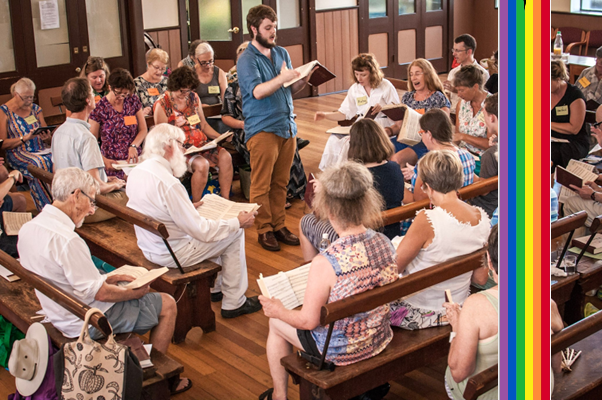

Earlier this weekend, Truett Seminary and the Dunn School of Music at Baylor University hosted the the 25th Annual Sacred Harp Sing, giving students recital credit while sharing that “much of the music in this book consists of folk hymns.”
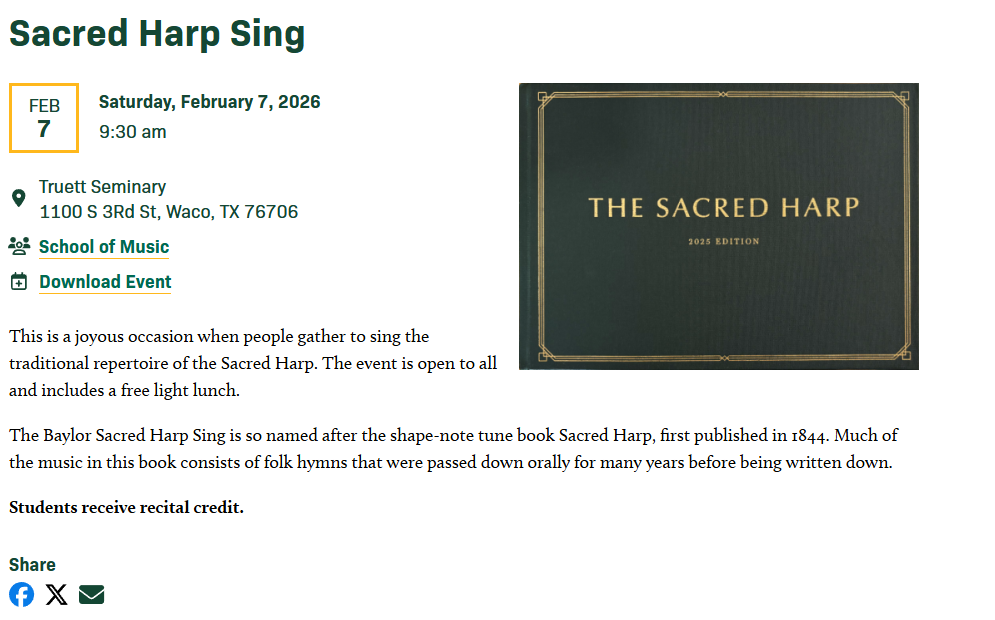
The Sacred Harp, the most common and widely used tunebook, is published byThe Sacred Harp Publishing Company. Its mission is to “promote traditional Sacred Harp singing, community, and culture across the United States and around the world.”
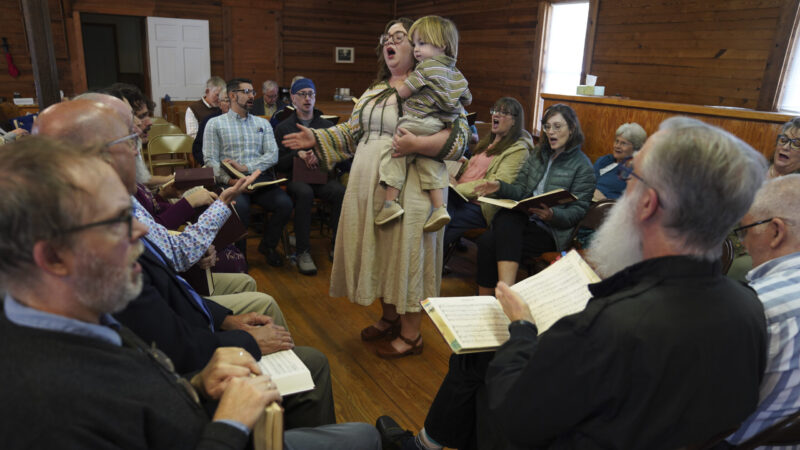
Also known as “shape-note’ singing, it’s a tradition of American acappella communal singing that uses a modified musical notation with different shapes for notes (like triangles, ovals, squares, and diamonds) to represent syllables (fa, sol, la, mi) and make sight-reading easier, especially for untrained singers.

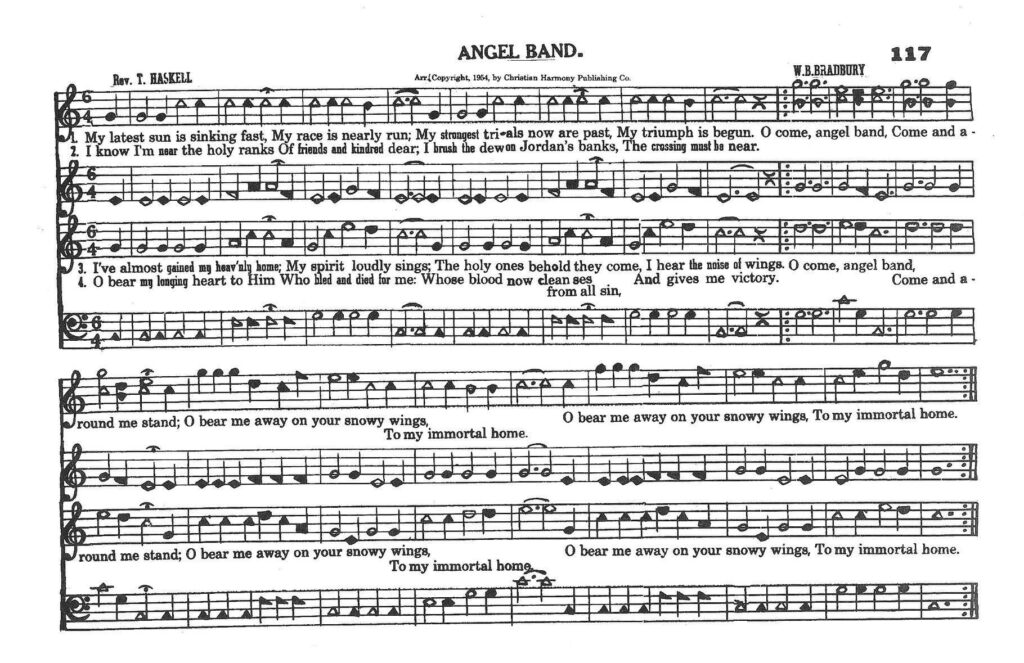
The Sacred Harp Publishing Company promotes Sacred Harp singing by gathering “the best collection of shape-note hymns, revival choruses, plain and fuging tunes, odes, and anthems ever offered the singing public,” with an example featured below.
Things we love: Sacred Harp singing
— Protestia (@Protestia) October 18, 2025
Hail the day so long expected,
Hail the year of full release.
Zion’s walls are now erected,
And her watchmen publish peace.
Through our Shiloh’s wide dominion,
Hear the trumpet loudly roar,
Babylon is fallen to rise no more.
Blow the trumpet… pic.twitter.com/pf25PB5Mbq
Last year was a big year for the The Sacred Harp, as they completed a major revision to their songbook, which had been unchanged since 1991.
Known as the “Green Book” or ‘Denson book,’ they introduced 113 new songs, including 49 from living composers. They also removed 77 songs and made several other changes as well, including changing and restoring verses to songs, changing some keys, removing parts, etc.
Stuart Ivey, a longtime singer and assistant director of bands at Baylor, is estatic about the new release, explaining:
“The 2025 edition includes songs written by a diverse population of composers. Through each new revision since 1844, new songs by living composers have infused energy into the community while continuing the musical traditions of the past 200 years.”
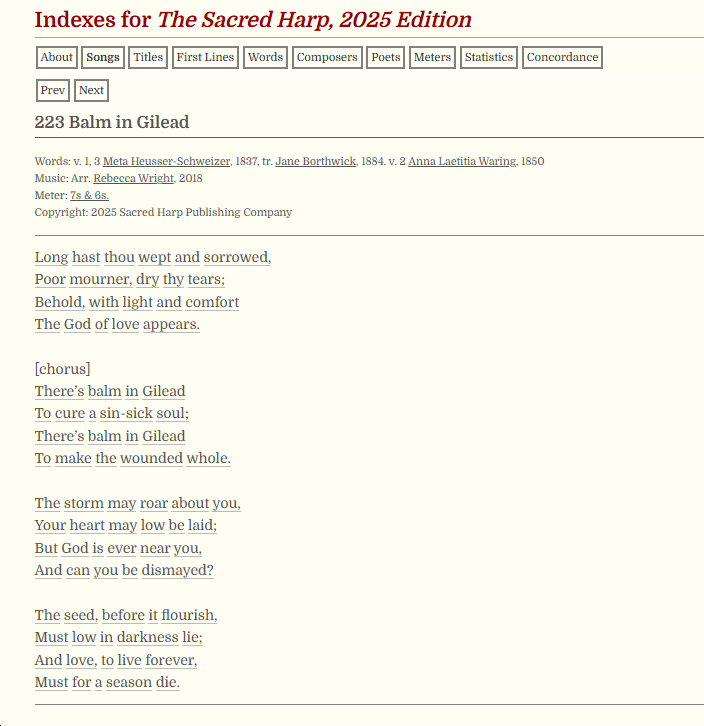
One of these new composers is Rebecca Wright, whose 2018 tune “Balm in Gilead” is a mashup of versions from the 1840s all the way through the 1970s.
Notably, Wright is married to Lorelei Erisis, a transgender woman.
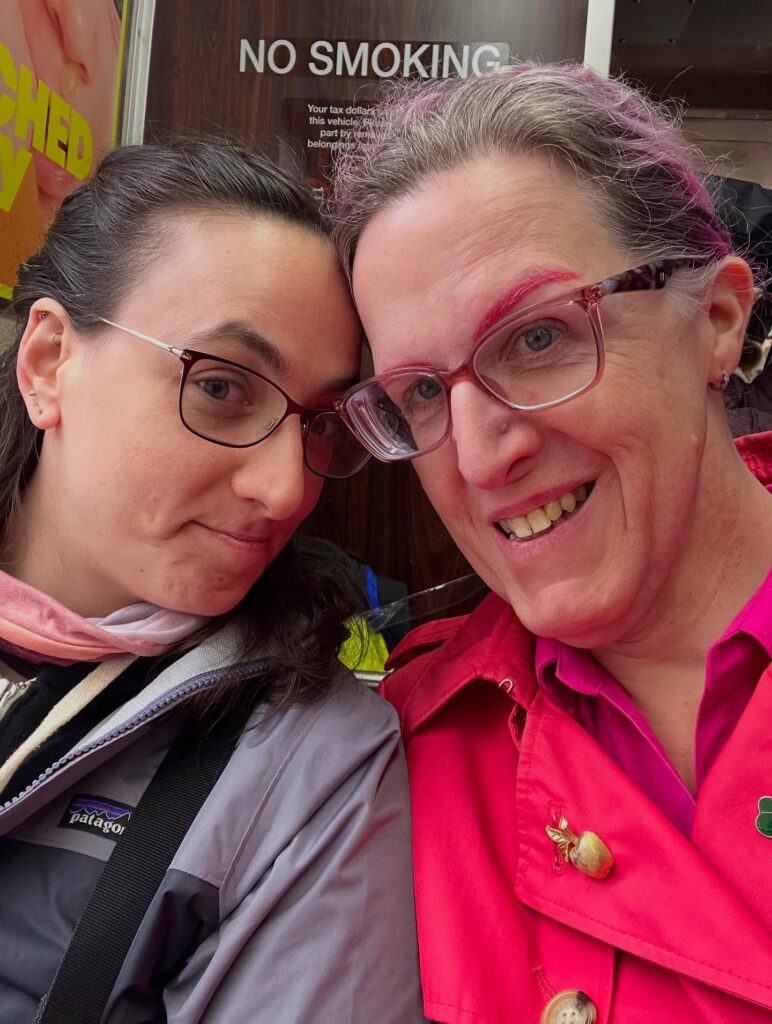
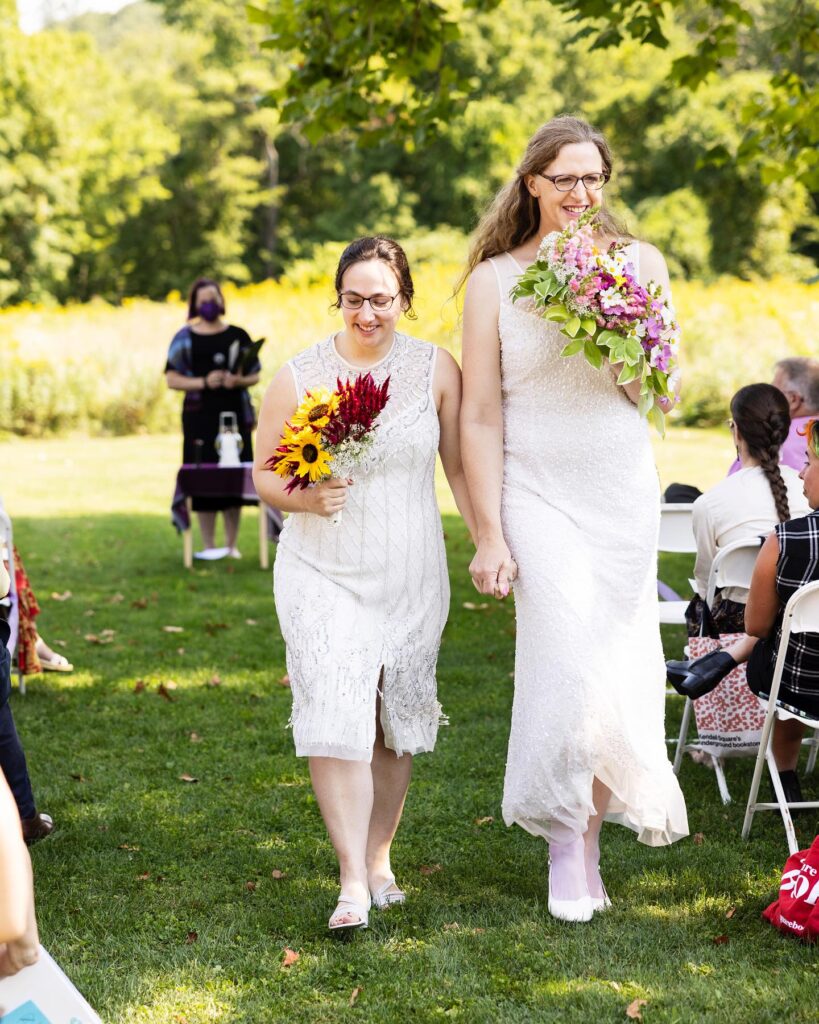
Having a real affinity for Sacred Harp singing, the two will often lead the singing.
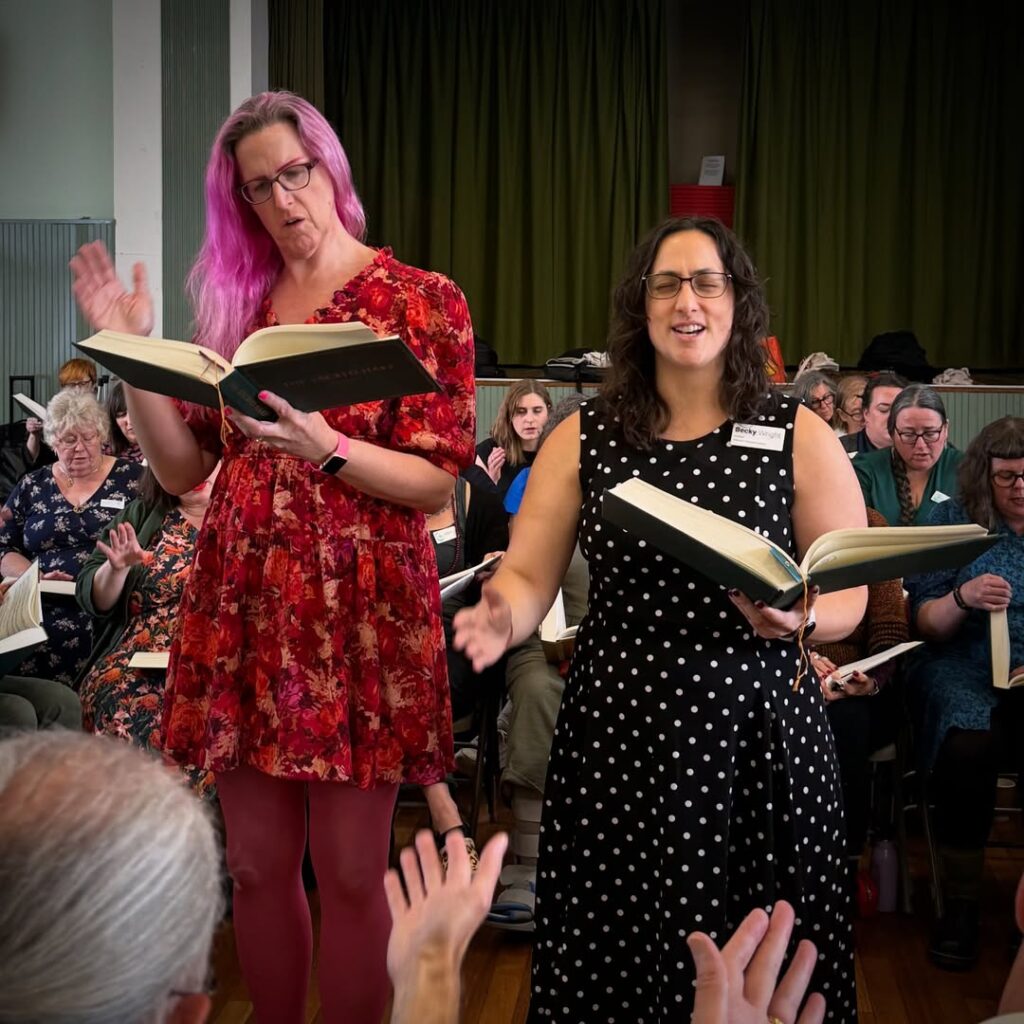
They will take your scared traditions and wear them like…
— The Cherry Tree of Liberty (@MinarchistKitty) September 15, 2025
…whatever this is. pic.twitter.com/vo5YC4EYUK
They’re not the only queer additions.
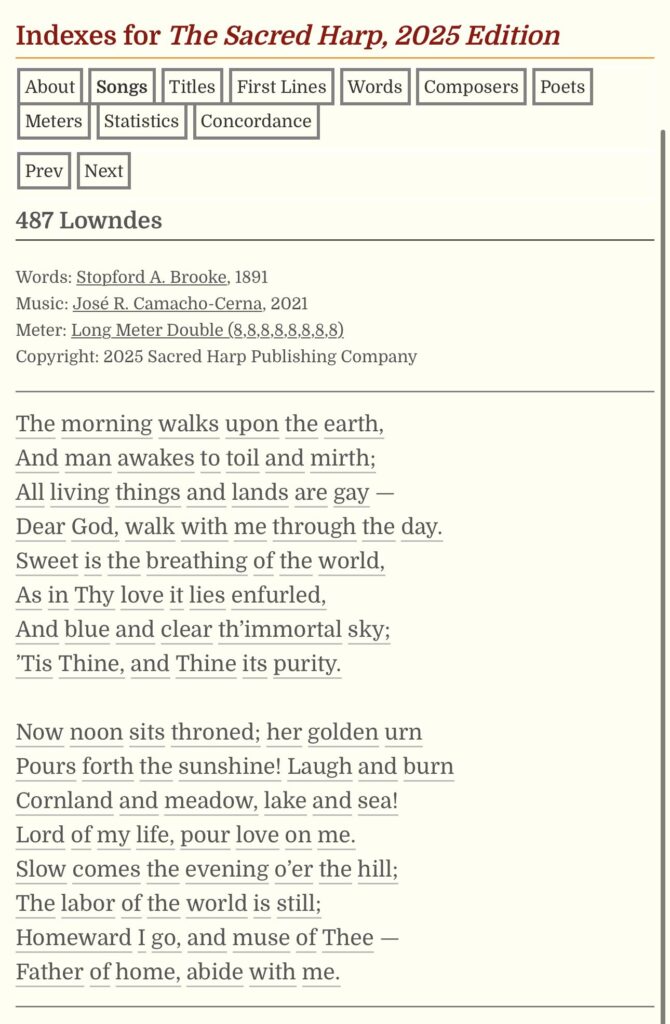
Another entrant is José Camacho-Cerna, an openly gay composer who also happens to be the book’s first Latino entry. While sacred texts are to be used as the basis for all submissions, his addition—the hymn “Lowndes”—appears to include an intentional double entendre.
Historically, however, Sacred Harp has been a Christian tradition. The original 1844 tune book was written explicitly for protestant Christians, specifically Baptists, Methodists, and Presbyterians, and they could frequently be seen using the tunebook to worship.
Over the years, however, those who have sought to preserve the history and practice have not been. The Sacred Harp Publishing Company, which has done the bulk of the work in the 20th century to keep the tradition alive, is a secular organization and publishing house with no interest in promoting its religious roots and original purposes.
Two major tunebook revisions presently exist. One is the aforementioned “Green Book,” whose new edition everyone is celebrating. The other is the Cooper revision, known as the “Blue Book,” published by the Sacred Harp Book, which is the older of the two and which has not (yet) been hijacked by the queer contingent.
Here is the caution for Christians: there is a difference between Sacred Harp singing as a form of shared worship among a local body of Christian believers, and registered events planned and organized by the Sacred Harp Publishing Company and others.
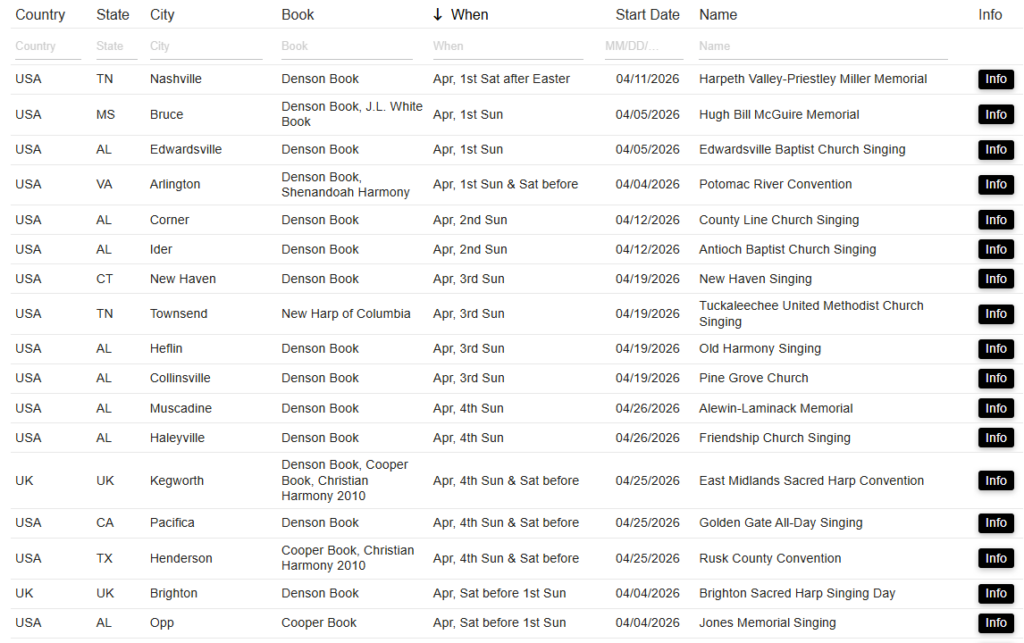
Despite Sacred Harp singing sessions frequently, or even exclusively, comprising Christian hymns, and despite hymns and spiritual songs making up the vast bulk of the songbook, these public gatherings are not “Christian events,” and the participants are not always believers. Participants care about the joy of singing, rather than the theological content being expressed.
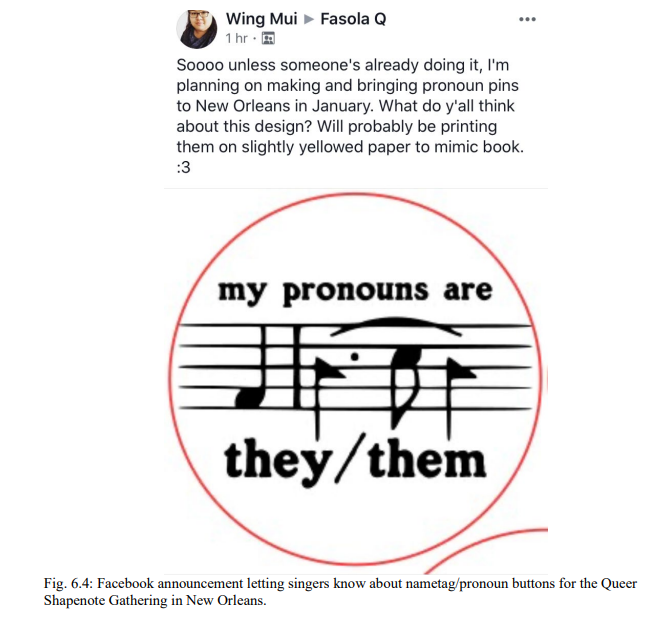
Instead, organizers actively welcome people of all religions, or no religion, to join in singing these hymns. Whether atheist, Wiccan, or non-binary, they/them living in a polycule, all may participate, and all may lead. In fact, there are even all-LGBTQ Sacred Harp singing gatherings, and they sing the hymns just as anyone else would.
As we’ve already pointed out, there’s no guarantee that a hymn you may be singing was written by a Christian; it may instead have been composed by someone who hates Jesus and the faith, but crafts it simply for its religious references and singability.
All this has caused tension. At one recent Harp Singing, a prominent member lamented the recent skirmishes over the updates made to the 2025 Sacred Harp songbook, noting that many Christians are uncomfortable with the newest addition:
Over the weekend I heard a lot of sacred harp politics and gossip, including some dissatisfaction over the revision process and consultation with composers.
Unsurprisingly there seems to be a small schism forming that intends to stick with the 1991 book, rejecting the 2025 due to all the non-Christians and queers who worked on the book or who have their music included.
This is a laughable position if one has even superficial knowledge of Sacred Harp history. But I’ll say that as a Christian composer, one of the features of the United Convention that gave me greatest cause to rejoice was the presence of many transgender singers able to be themselves with such apparent confidence.
Christians should worship the Lord in spirit and in truth, and Sacred Harp singing is a beautiful way to do that. We would simply caution believers to be mindful of whom they do it with and from which book they do it from.







7 responses to “‘Sacred Harp Singing’ Goes Gay: Should You Mark and Avoid?”
Most hymn collections from the past 10-15 years are wokeified. The Presbyterian hymnal “Glory to God” is one of the worst offenders. I can give a pass to a new hymn (I just won’t sing it), but when you take great hymns of the faith and change the text to neuter God as Father and other evil offenses, then I want to throw it out the window. What I do is if a great hymn of the faith has been butchered, I will print the original hymn in the bulletin. Just more of what Rick Warren and Bill Hybels began a al Peter Drucker was to invite the world in the front door of the church to make the church unrecognizable today. The church is no different. That they have slithered on to the sacred harp singing wonderful tradition is just another slithering in of the snake.
The Lord is just exposing the tares and goats.
Galatians 3:28: There is neither Jew nor Greek, there is neither slave nor free, there is no male and female, for you are all one in Christ Jesus.
very interesting article on which I knew nothing at all, thanks!
Very important that we pure people keep using music as a tool of exclusion and bigotry.
As opposed to using music as a tool for inclusion of sexual perversion to infiltrate Christian singing/worship and fellowship. The religion of tolerance is intolerance and bigotry with an attempt at sarcasm.
Thank you for the article.
Within the Cooper book’s primary region, Southeast Alabama, we are striving to keep our Sacred Harp singings as distinct gatherings for Christian worship. I understand this to be true in Henderson, Texas, Dutton, AL, and other less progressive areas.
“Let those refuse to sing, who never knew our God” – Albion, 52.